A sunny windowsill, greenhouse or sheltered summer patio can produce a useful crop of chillies. The key is matching the variety to the warmth and time you can provide. Start with a flavour and heat level you will use, then plan how the young plants will grow before outdoor temperatures become suitable.
Warm growing conditions
Good in pots
Frost tender
Long cropping season
Choose your heat level
| Botanical group | Capsicum species and cultivars |
| Common garden species | Capsicum annuum |
| Family | Solanaceae |
| Plant type | Tender perennial, often grown as an annual |
| Preferred position | Bright, sunny and sheltered |
| Reliable UK setting | Greenhouse, polytunnel or bright protected space |
| Sowing window used | February to April with indoor warmth |
| Germination warmth | Around 25 to 28°C for many varieties |
| After germination | Bright light and appropriate warmth |
| Outdoor planting | Usually late May or June, after acclimatisation |
| Outdoor night temperature | Reliably at least 12°C |
| Planning spacing | 45cm; adjust for the variety |
| Container starting point | One plant per pot, usually at least 22cm wide |
| Harvest window | July to October, depending on variety and conditions |
| Watering | Even moisture with good drainage |
| Support | Canes for taller or heavily laden plants |
| Pollination | Flowers can self pollinate |
| Feeding | Suitable fruiting plant feed as directed |
| Winter survival | Requires a frost free protected space |
| Kitchen handling | Handle hot fruits carefully and wash hands |
| Plant name | Crop type | Spacing |
Sow indoors
Plant outdoors
Harvest
Polytunnel | |||||||||||
|---|---|---|---|---|---|---|---|---|---|---|---|---|---|---|
| Jan | Feb | Mar | Apr | May | Jun | Jul | Aug | Sep | Oct | Nov | Dec | |||
| Chilli Pepper | Unusual & exotic | Single 45cm, In row 45cm, Row gap 45cm | No activity recorded | Sow indoors | Sow indoors | Sow indoors | Plant outdoors, Polytunnel | Plant outdoors, Polytunnel | Harvest, Polytunnel | Harvest, Polytunnel | Harvest, Polytunnel | Harvest, Polytunnel | No activity recorded | No activity recorded |
Sow indoors: February, March, April. Plant outdoors: May, June. Harvest: July, August, September, October. Polytunnel: May, June, July, August, September, October.
February to April is the indoor sowing window shown here. Slow, very hot varieties may require an earlier start with extra warmth and light. The May to June planting band depends on night temperatures, and the May to October polytunnel band describes the main protected growing season, not permission to leave tender plants in a cold tunnel. July to October is a combined harvest window across varieties.
A compact chilli suits a bright pot growing space where you can check water regularly. One healthy plant that ripens fruit you enjoy is more useful than a tray of late seedlings with nowhere warm to grow. Buying a young plant is a practical way to shorten the first season.
Superhot types can be demanding in a short, cool summer. If you lack a greenhouse or strong indoor light, choose an earlier variety and a modest plant size. Consider where the mature plant will stand, including the height of its pot and any support.
Photo: EngProfUSA, CC BY-SA 4.0. Resized and optimised; cropped for display. Adapted image under the same licence.
Give chillies the brightest suitable space available. A protected greenhouse or polytunnel usually offers more reliable warmth than open ground. Monitor conditions at plant level rather than assuming a sunny structure is always comfortable.
For outdoor plants, choose a sheltered patio or warm wall and wait for reliably mild nights. Acclimatise plants gradually before leaving them outside. A favourable afternoon does not compensate for a cold overnight minimum.
Use containers with unobstructed drainage. A pot at least 22cm wide is a starting point for many plants, while larger cultivars need more root space. Avoid standing a pot in water for prolonged periods.
Chilli seedlings need warmth to germinate and bright conditions immediately afterwards. Prepare the growing space before sowing so newly emerged plants are not left stretching in a dark warm corner.
1.
Choose labelled seed with a maturity period and heat level suited to your growing space.
2.
Fill clean small pots or modules with a suitable fine seed compost and moisten it evenly.
3.
Sow at the packet depth, commonly around 5mm, and label each variety.
4.
Provide controlled warmth and check the actual compost temperature where possible.
5.
As seedlings emerge, give them bright light, airflow and warmth without keeping them under a closed wet cover.
6.
Move seedlings into individual pots as necessary and increase pot size as the roots fill the available space.
7.
Acclimatise outdoor plants gradually and wait until nights are reliably mild before permanent placement.
8.
Plant at the previous depth, water in and install support before loaded branches begin to bend.

Watering
Keep the compost evenly moist while allowing excess water to escape. Small pots can dry rapidly on a bright day, so check them more often during hot weather. Lift a pot occasionally to learn the difference between well watered and drying compost.
Avoid alternating severe drought with heavy watering. Wilting, dropped flowers and slow growth call for a check of the roots and temperature as well as the watering routine. A plant in saturated compost does not need another drink simply because its leaves droop.

Feeding
Once plants are flowering and fruiting, use a suitable high potassium liquid feed according to its label. Container plants rely on a limited supply of compost nutrients. A bed that was already enriched may need a different feeding programme.
Do not stack several feeds or apply concentrated fertiliser to stressed roots. Excessive leafy growth with few fruits warrants a review of light, temperature and nitrogen supply. Feeding cannot make up for a consistently dark position.

Pruning
Routine removal of side shoots is not necessary for an ordinary garden chilli bush. Pinching the growing tip can change the shape but may delay fruiting, so it is not an automatic first step in a short season.
Tie taller stems gently to canes and support branches carrying a heavy crop. Use clean scissors or secateurs to harvest instead of pulling against brittle stems. Keep the plant’s framework intact for later fruits.

Winter care
Chillies cannot remain outdoors through UK frost. If you want to keep a healthy plant, bring it into a bright protected space before cold damage occurs. Inspect it for pests before placing it beside houseplants.
Water more sparingly as growth slows and remove dead material. Overwintering is a choice, not a guarantee of survival or a requirement for success. Starting with fresh young plants each spring is also a workable approach.
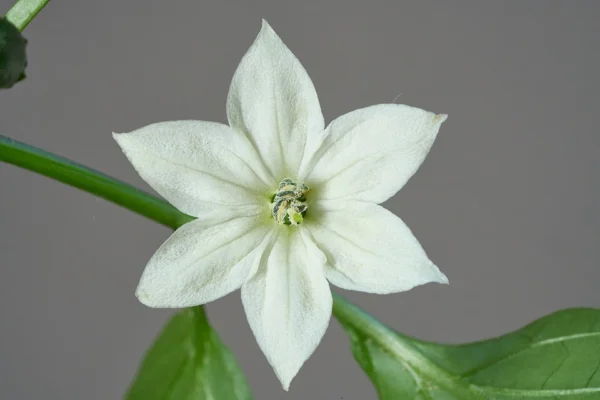
Chilli plants carry smooth leaves and flowers that develop into fleshy fruits. Shape, colour and direction of growth vary widely between cultivars. A green fruit may be ready for a particular recipe even though it has not reached its final ripe colour.
Colour does not reliably indicate heat. Keep the variety label through harvest and separate batches in the kitchen. The photographs show named groups or clearly identified cultivars, but a casual visual match cannot establish the strength of an unknown pepper.
Photo: Dennis Schubert, CC BY-SA 4.0. Resized and optimised; cropped for display. Adapted image under the same licence.
A heated germination space can make early sowing possible, but young plants still need enough light afterwards. If that balance is difficult, sow later within the appropriate window or buy established plants. Avoid growing weak seedlings merely to achieve an early date.
Ventilate a greenhouse or tunnel when it becomes too hot. High temperature can reduce fruit set even in this warmth loving crop. Check maximum and minimum readings and use shade when necessary without leaving plants permanently starved of light.
Pick fruits at the stage recommended for the variety and intended use. Regular harvesting can support continued cropping. Handle very hot chillies with gloves, keep fingers away from eyes and wash hands and utensils afterwards.
Photo: Kolforn, CC BY-SA 4.0. Resized and optimised; cropped for display. Adapted image under the same licence.
Check the temperature of the compost, moisture and seed age. Some varieties germinate slowly, especially in cool conditions. Do not repeatedly flood the tray or dig up every seed before allowing the expected germination period.
Warmth without enough light encourages stretching. Improve the growing position promptly and avoid crowding. Review the timing of future sowings if suitable light is unavailable in late winter.
Check for drying roots, excessive heat, cold nights and an unsuitable feeding balance. Chillies can self pollinate, so another plant is not automatically the missing ingredient. Occasional dropped flowers are normal.
Look closely for aphids and inspect neighbouring plants. Deal with a small infestation early and encourage suitable natural enemies where practical. Identify the pest before choosing any treatment for an edible crop.
Move container plants to a brighter protected position while temperatures are still suitable. Harvest mature fruits that can be used green. A very late sowing or slow variety may simply have run out of growing season.
Seed is the usual method for starting a chilli collection. Buy varieties with clear labels and keep records of which ones crop well in your own conditions. Germination warmth should be measured rather than guessed from room comfort.
Saved seeds may produce different offspring if varieties have crossed, and hybrids may not repeat the parent. Keep selected plants isolated appropriately if true to type seed matters. Use purchased labelled seed when you want a predictable repeat.
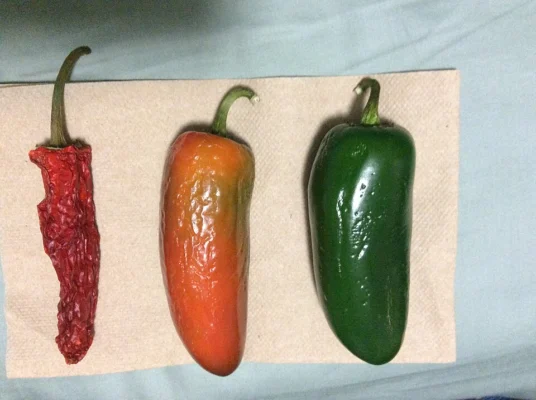
Jalapeno
A familiar choice for fleshy fruits used green or allowed to ripen red. Look for an early selection if your growing season is short. The group contains different strains, so compare the supplier’s size and maturity information.
Photo: Conrads.wikipedia.account, CC BY-SA 4.0. Resized and optimised; cropped for display. Adapted image under the same licence.
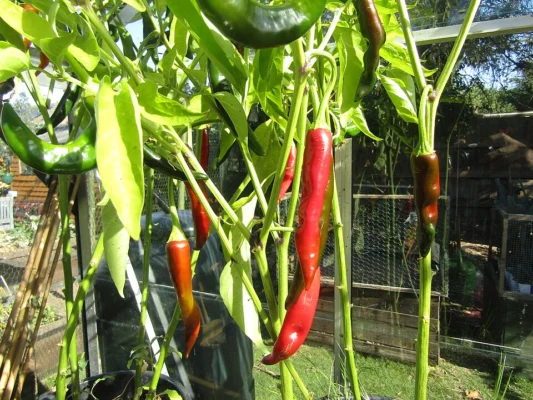
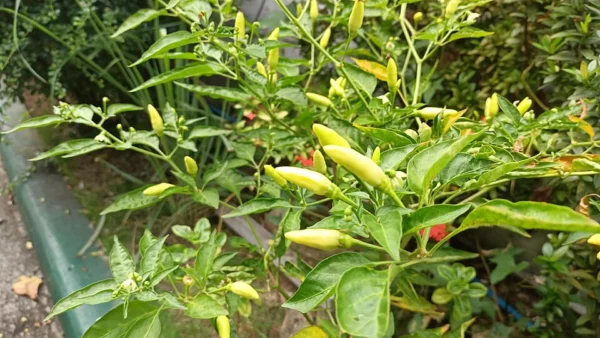
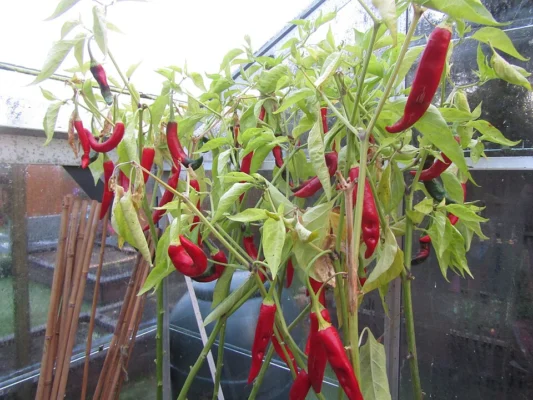
Cayenne
Long tapered chillies offer a useful cooking and drying crop. Choose a named strain suited to your available warmth. The photographs include plants grown in Norfolk, illustrating that local conditions and care matter alongside the variety.
Photo: Kolforn, CC BY-SA 4.0. Resized and optimised; cropped for display. Adapted image under the same licence.
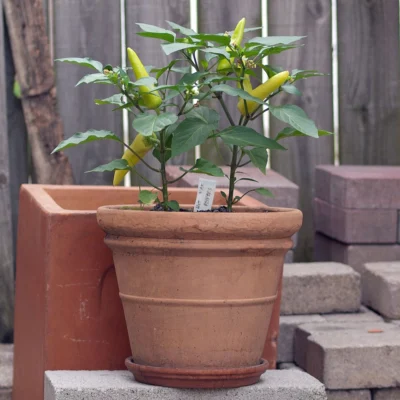
Hungarian Hot Wax
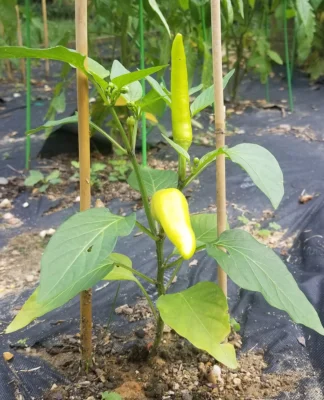
Pale tapered fruits change colour as they ripen. This is a hot pepper choice, despite its resemblance to some mild wax peppers. Retain the cultivar label and select for the flavour and heat you actually want.
Pictured: Hungarian wax type. Use the seed label to confirm the hot selection.
Photo: Jeff Kwapil, CC BY-SA 4.0. Resized and optimised; cropped for display. Adapted image under the same licence.
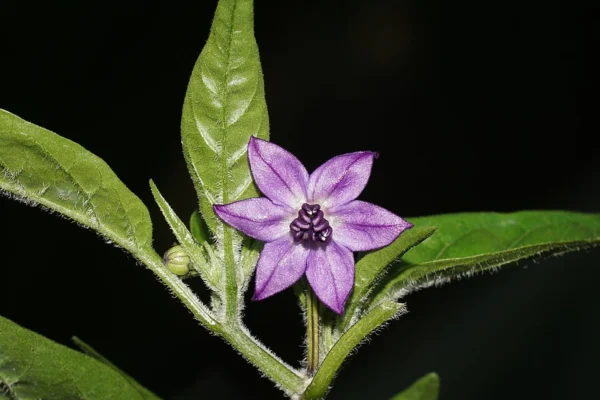
Black Pearl
Dark foliage and rounded fruits that mature from black to red make this an ornamental choice. Its peppers are hot. Buy plants raised for edible use if harvesting is your aim, rather than assuming every decorative shop plant has been grown as a food crop.
Photo: Vengolis, CC BY-SA 4.0. Resized and optimised; cropped for display. Adapted image under the same licence.
Use the BFFD map to find local growers and nurseries. Ask about mature size, ripening time and suitable growing conditions as well as heat, particularly for an outdoor or windowsill crop.
Chilli flowers can set fruit with their own pollen, while insects may still visit plants outdoors or in a ventilated growing space. Avoid unnecessary spraying and inspect the crop regularly so pest problems are caught early.
Keep greenhouse growing areas accessible for observation. Where biological controls are used, follow the supplier’s instructions and check compatibility before applying other products. A clean, well managed crop space helps you see what is happening.
Published by Buy From Farmers Direct. Sources checked 6 October 2026. Growing references: RHS: Growing chilli peppers; South Devon Chilli Farm: Growing FAQs; South Devon Chilli Farm: Growing plants; ChilliChump: Growing chilli peppers; USDA: Black Pearl; All America Selections: Black Pearl. The seasonal timeline uses the shared BFFD Growers Calendar record; adjust timings to your variety and local conditions.
Yes, in a warm sheltered position during summer. Wait for reliably mild nights and acclimatise plants first. A greenhouse or polytunnel usually gives more dependable conditions for ripening.
February to April is the general indoor window used here. Slow varieties may need an earlier start with controlled warmth and extra light. Follow the specific packet rather than treating all chillies identically.
Many specialist growers use about 25 to 28°C. Measure the compost temperature if possible. Seeds may germinate at lower temperatures, but results can be slower and less even.
No. Chilli flowers can self pollinate. If flowers are dropping, investigate temperature, moisture and feeding before assuming that a second plant will solve the problem.
No. Ordinary bushy plants can crop without pinching. Removing the growing tip changes the shape and may delay fruiting, which can be unhelpful in a short season.
A healthy plant can be overwintered in a bright frost free place with reduced watering. Check carefully for pests and accept that survival varies. Growing fresh plants each year is also suitable.
Use the calendar to plan sowing and the move into summer conditions, then record which varieties ripen reliably in your space. Keep fruit labels through harvest so that flavour and heat remain predictable in the kitchen.
Explore more growing guides: Aubergine, Cantaloupe, Basil.
Want to get food independence, support your local grower, get better prices and shop more privately?
Local food isn’t just something you find. It’s something you protect. A free account helps keep local supply visible, supported, and resilient.

….it takes 30 seconds for food lovers and 5 minutes for suppliers
We built this for people who care where their food comes from. For people who want to remain food secure. For Farmers to get to the local people, who deserve a better income and to deliver a better price for you. For the environmentally conscious and the privacy-conscious. An account simply helps us make the map and supplier reach more useful to you, without changing how open it is. You’re always in control.


Find local food. Stay connected to it. Create a free account to support local producers and be part of a growing food network.


