Natures proud pollinators
Buying honey bees in the UK usually means obtaining a nucleus colony, full colony, package of bees or swarm, with nucleus colonies being one of the most common beginner routes. Beginners should seek advice from a local beekeeping association before buying bees, make sure their hive and equipment are ready, ask about colony health, queen origin, temperament, disease history and recent inspections, and register with BeeBase for official bee health support. The National Bee Unit’s guidance on obtaining bees says bees can be obtained as a full colony, nucleus, package or swarm, and GOV.UK says suspected notifiable honey bee pests and diseases must be reported to the National Bee Unit or local bee inspector immediately.

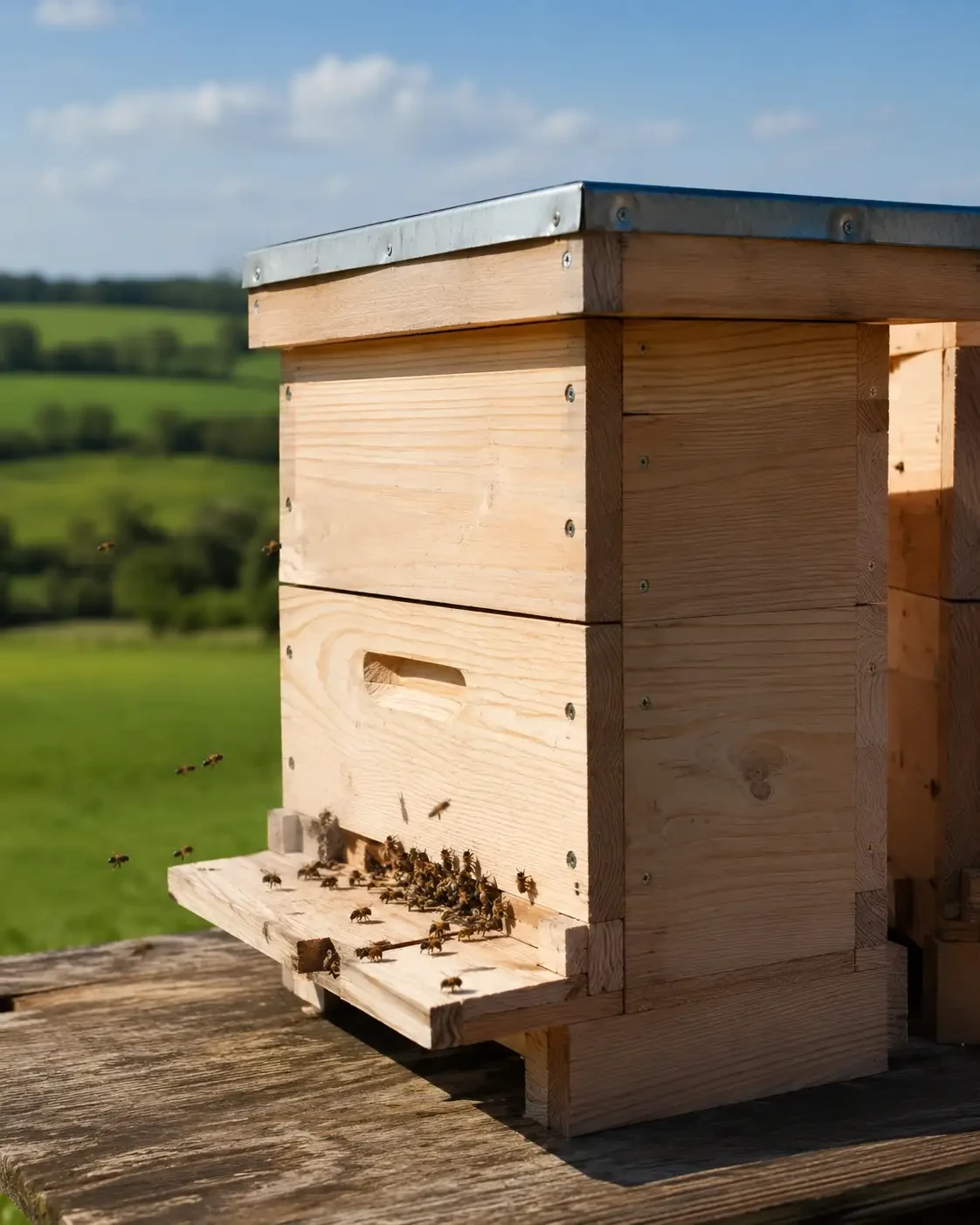
Buying bees is one of the biggest decisions a new beekeeper makes.
A nucleus colony, often called a nuc, is a small working colony with bees, brood, comb and a laying queen. It is one of the most common beginner routes because it is smaller than a full colony and can grow into a full hive over the season.
The National Bee Unit’s guidance on nucleus colonies describes honey bee nucleus colonies as usually consisting of five to six brood frames with an adult honey bee population and brood frames. A nucleus colony can be a good starting point, but only if it is healthy, properly prepared and suited to the beekeeper’s hive equipment.
The WBC hive is the traditional double walled hive many people picture when they imagine a beehive. It can look attractive, but it has more parts and can be more time consuming to handle. It may suit some beekeepers, but beginners should understand the extra work before buying one.
A package usually contains adult bees and a queen but no established comb or brood in the same way as a nucleus colony. Packages are more common in some countries than others, and beginners should take local advice before choosing this route.
A local beekeeper or association may understand the local conditions, forage, common hive types and typical issues in the area. Local support can also be invaluable if the beginner needs help after the bees arrive.
This does not mean every local seller is automatically suitable. Buyers still need to ask questions about health, temperament, queen status, frame type and disease history.
But where possible, beginners should avoid anonymous or poorly explained sales. If the seller cannot explain the colony clearly, that is a warning sign
Imports and movement of bees carry biosecurity considerations.
BeeBase has dedicated guidance on importing and exporting live honey bees and bumble bees. GOV.UK guidance also explains that import regulations are an important defence against serious pests such as small hive beetle and Tropilaelaps mite, which are not thought to be present in the UK.
For a beginner, the safest advice is simple: do not buy imported bees, queens or packages without expert guidance and a clear understanding of the rules, health risks and paperwork.
Bees are not just a product. Their movement can affect wider bee health.
Important questions include:
Before buying a hive, ask:
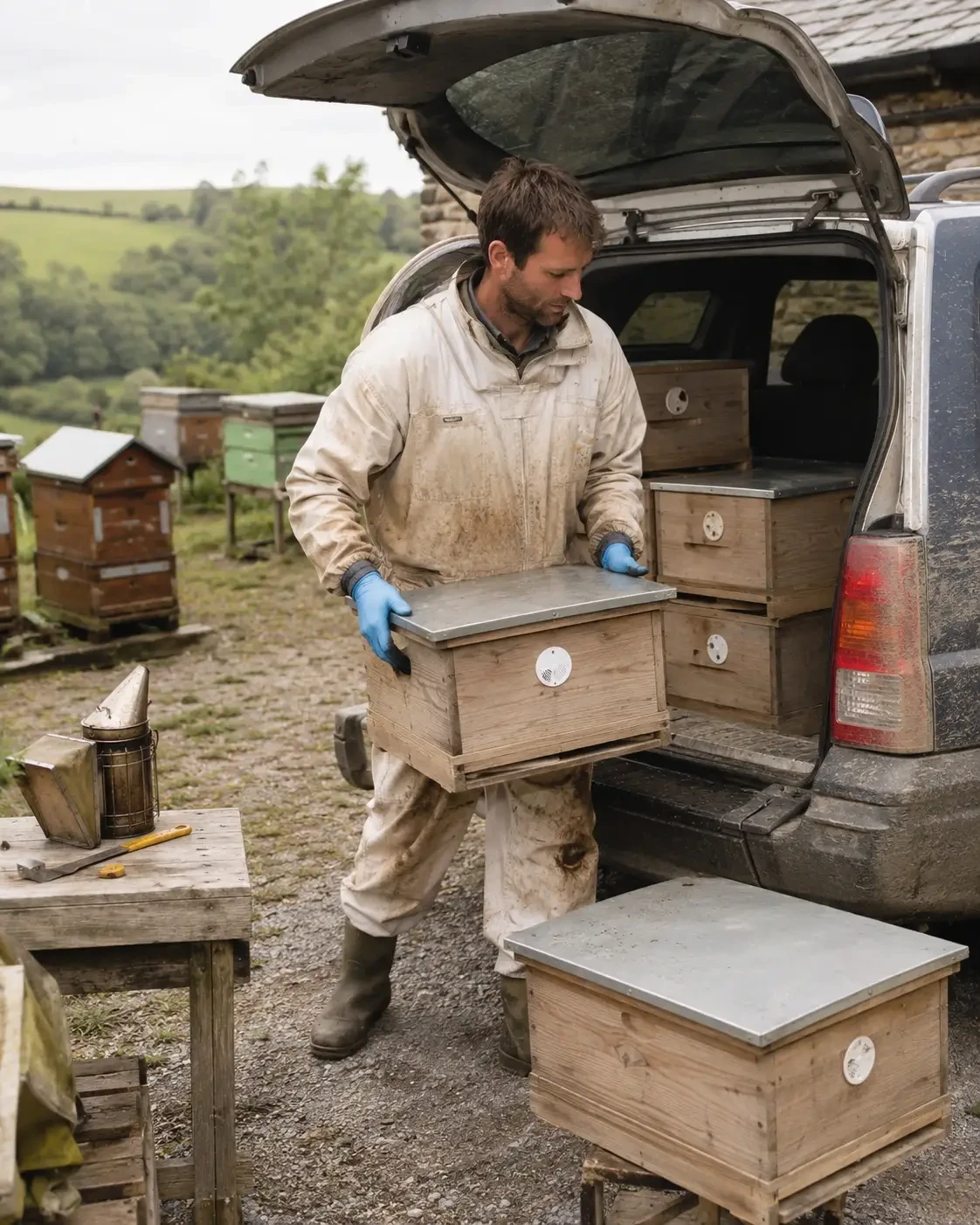
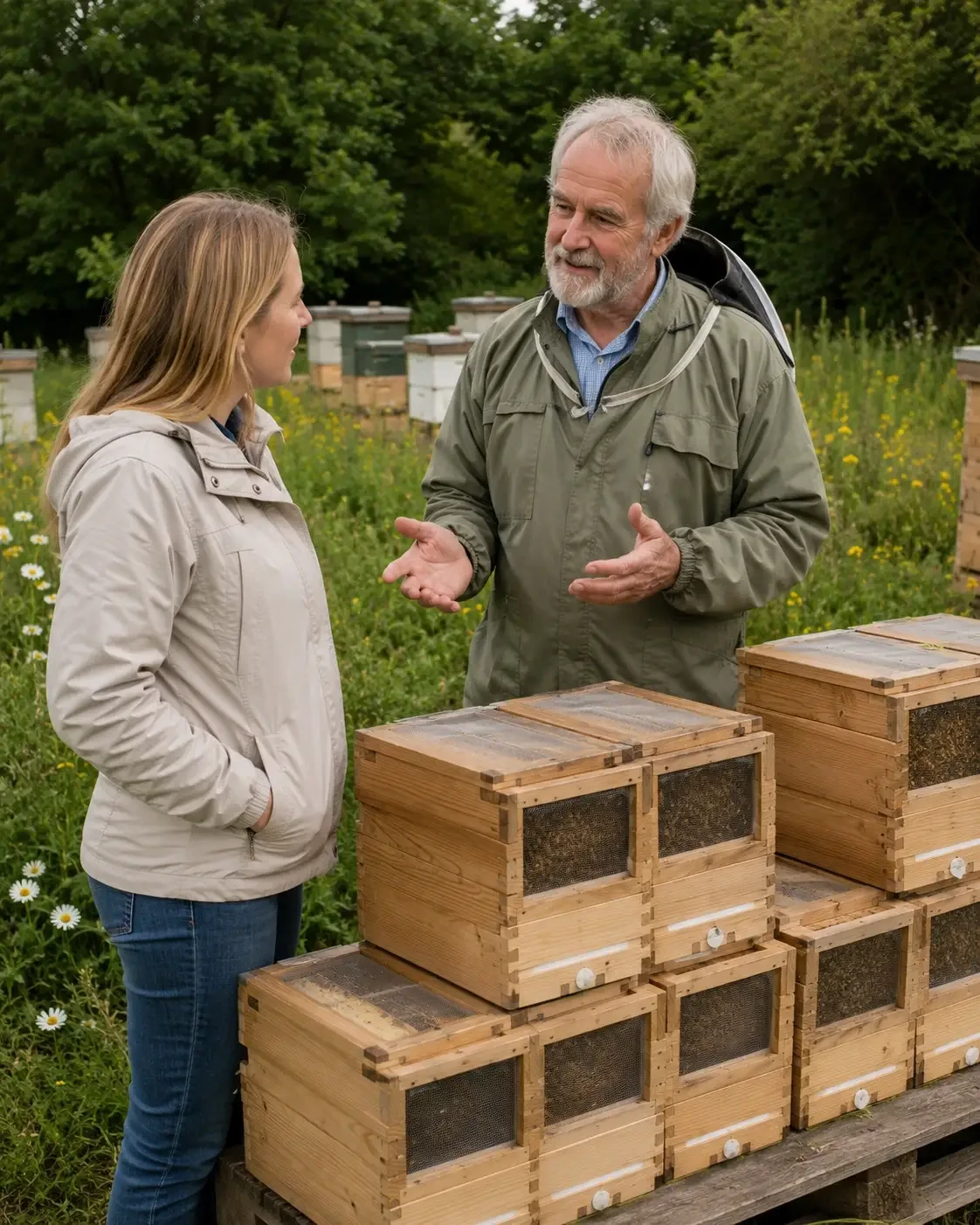
Cheap bees can become expensive if the colony is weak, unhealthy or difficult to manage.
A good purchase should be judged by colony health, queen quality, temperament, local suitability, supplier reputation, frame compatibility and support, not price alone.
A responsible supplier should be willing to explain what is being sold. If a listing is vague, rushed, unusually cheap or unwilling to answer sensible questions, avoid it.
A beginner should not improvise this stage. Ask for practical guidance before collection day.

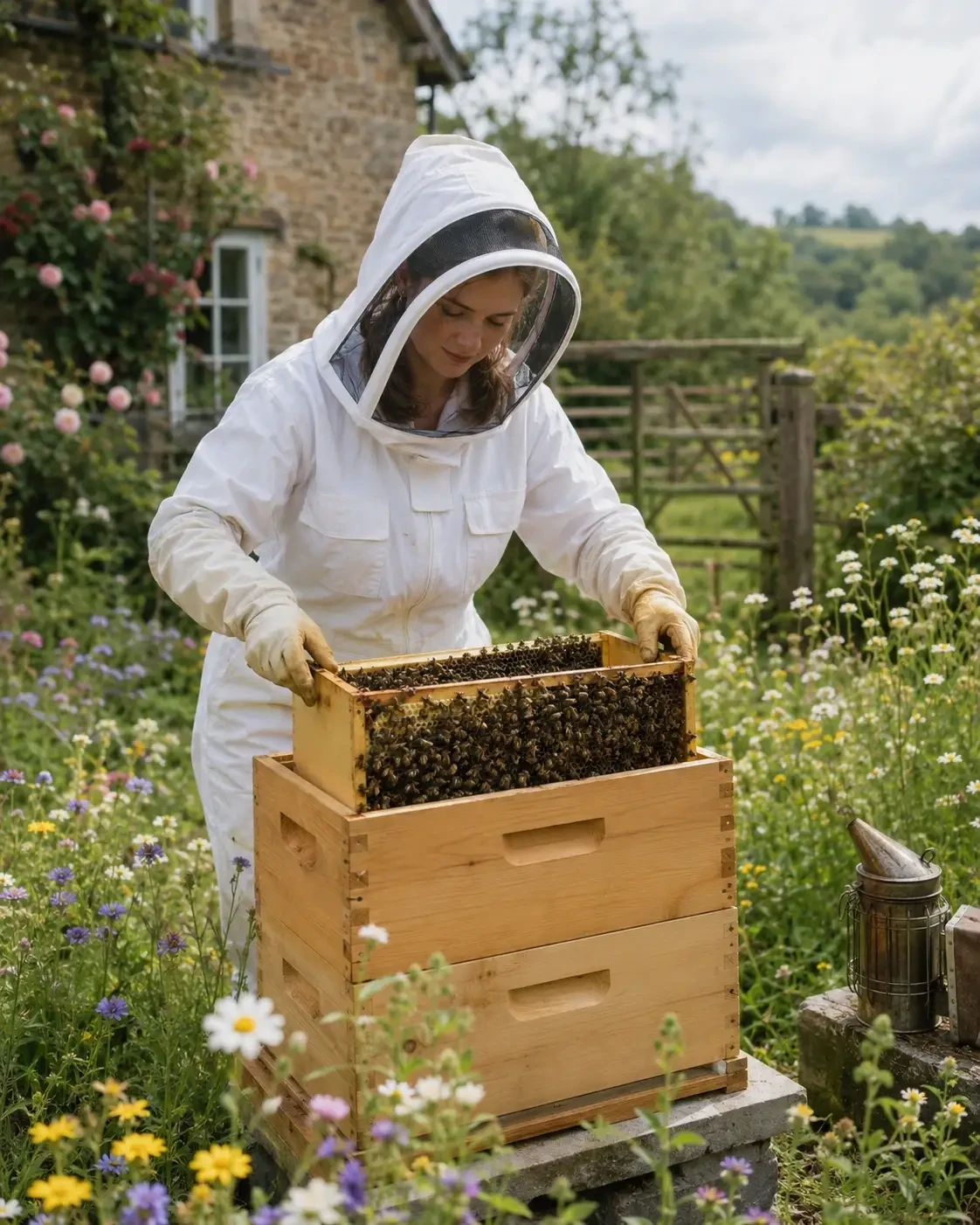
BFFD does not sell honey bees.
A BFFD beekeeper profile can help show:
Useful for beginner advice, hive types and local association guidance.
Official beginner guide covering getting started and equipment considerations.
Official guidance on cleaning and sterilising hive equipment.
Official guidance explaining the responsibility to notify suspected notifiable pests or diseases.
Official guidance on serious notifiable honey bee pests and diseases.
* External sources are provided for further reading. BFFD does not provide veterinary, legal, equipment safety or bee health inspection advice. Beekeepers should always follow current official guidance and contact the National Bee Unit or local bee inspector where required.
Related Beekeeper Pages
Related BFFD Pages
A nucleus colony is a small working colony, usually supplied with frames, bees, brood and a laying queen. It can grow into a full colony when managed properly.
A full colony can be more demanding because it contains more bees and needs confident management. Many beginners are better starting with a suitable nucleus colony, with local support.
Want to get food independence, support your local grower, get better prices and shop more privately?
Local food isn’t just something you find. It’s something you protect. A free account helps keep local supply visible, supported, and resilient.

….it takes 30 seconds for food lovers and 5 minutes for suppliers
We built this for people who care where their food comes from. For people who want to remain food secure. For Farmers to get to the local people, who deserve a better income and to deliver a better price for you. For the environmentally conscious and the privacy-conscious. An account simply helps us make the map and supplier reach more useful to you, without changing how open it is. You’re always in control.


Find local food. Stay connected to it. Create a free account to support local producers and be part of a growing food network.


