Edible passionfruit comes from Passiflora edulis, a vigorous tender climber with striking flowers and aromatic seeded pulp. In the UK, it is a crop for a bright heated greenhouse or conservatory, with a few ripe fruits a realistic ambition rather than a guaranteed annual harvest. It needs different care from the familiar outdoor ornamental passionflower, Passiflora caerulea.
Edible Passiflora edulis
Heated protection
Vigorous climbing vine
Help with pollination
Harvest only ripe fruit
| Botanical name | Passiflora edulis |
| Family | Passifloraceae |
| Plant type | Tender evergreen perennial climber |
| Origin | South America |
| Climbing method | Tendrils gripping a support |
| Potential height | Around 4 to 8m if unrestricted |
| Potential spread | Around 2.5 to 4m |
| Training allowance | Plan roughly 3m of framework width |
| RHS hardiness | H1A; protected growing all year |
| Winter temperature | Aim for a minimum of 15°C |
| UK growing place | Heated greenhouse or conservatory |
| Light | Bright, with light shade from hot glasshouse sun |
| Compost | Peat free, loam based and free draining |
| Watering | Moist during growth, never waterlogged |
| Flowers | White with purple and white filaments |
| Flowering season | Mainly summer under suitable conditions |
| Ripe fruit colours | Purple or yellow according to type |
| Pollination | Self compatibility varies; hand pollination helps |
| UK harvest | Conditional late summer or autumn crop |
| Propagation | Seed, cuttings or layering |
| Plant name | Crop type | Spacing |
Sow indoors
Plant outdoors
Harvest
Polytunnel | |||||||||||
|---|---|---|---|---|---|---|---|---|---|---|---|---|---|---|
| Jan | Feb | Mar | Apr | May | Jun | Jul | Aug | Sep | Oct | Nov | Dec | |||
| Passionfruit Vine | Soft fruit | Single 300cm, In row 300cm, Row gap 300cm | No activity recorded | No activity recorded | Sow indoors | Sow indoors, Plant outdoors | Sow indoors, Plant outdoors | Plant outdoors | No activity recorded | Harvest | Harvest | Harvest | No activity recorded | No activity recorded |
Sow indoors: March, April, May. Plant outdoors: April, May, June. Harvest: August, September, October. Polytunnel: no months recorded.
This calendar is for a permanently protected P. edulis vine. March to May is a convenient optional seed sowing window with a heated propagator; April to June planting means potting or establishing a plant under warm cover. August to October is only an indicative ripening window after successful flowering and pollination. Variety, heat and flowering date can move it, and some UK vines never ripen fruit. No ordinary polytunnel band is shown because an unheated tunnel does not provide the required winter temperature. The 300cm spacing is a framework allowance for a trained vine.
Choose this crop if you can provide substantial bright space and winter heating. Its leaves and flowers are attractive even in a season when fruit fails, but heating a building solely for a small crop deserves thought before buying.
A labelled young plant from a specialist nursery is more predictable than an unidentified seedling. Ask about its fruit type and whether it can set fruit with its own pollen.
Photo: Forest & Kim Starr, CC BY 3.0. Resized and optimised; cropped for display. Forest & Kim Starr
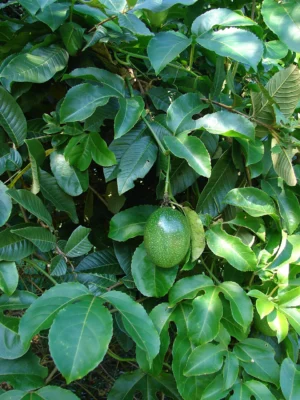
Use a heated conservatory or greenhouse with plenty of light. Provide light summer shade when strong sun through glass scorches foliage, while avoiding a permanently dark position.
Install trellis or wires before the vine becomes tangled. Allow several metres of trained growth and keep shoots away from opening vents, doors and neighbouring plants.
Start a suitable young plant in a container around 30cm wide, then increase the pot size as roots fill it. An established vigorous vine needs a substantial stable container rather than a small nursery pot.
Use peat free loam based potting compost with drainage suited to the container. Keep drainage holes clear and leave a watering space below the rim.
Photo: Forest & Kim Starr, CC BY 3.0. Resized and optimised; cropped for display. Forest & Kim Starr
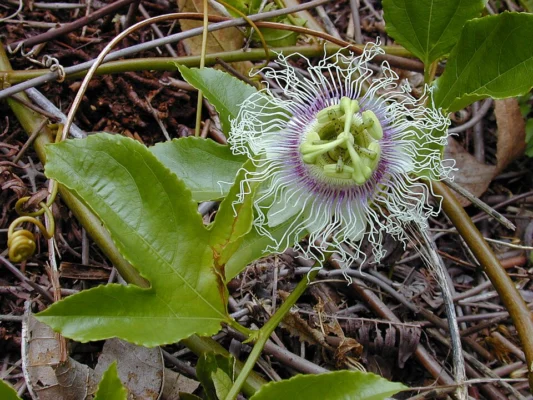
Begin with the right species and a prepared warm home. A sheltered outdoor wall is not a substitute for the conditions needed by this edible tropical vine.
1.
Buy a healthy labelled Passiflora edulis plant. Inspect leaf undersides and stems for whitefly, scale or mealybugs before bringing it beside other protected plants.
2.
Confirm its pollination requirements. A yellow type generally needs a compatible genetically different vine; two cuttings of the same plant do not solve that requirement.
3.
Set up a sturdy support and check the available training space. Arrange the pot so you can reach both the compost surface and the developing flowers.
4.
Moisten the rootball before repotting. Choose a larger container with drainage and prepare suitable peat free loam based compost.
5.
Slide the plant from its nursery pot without tearing the roots. Replant at the previous depth, firm lightly and avoid burying the base of the stems.
6.
Water thoroughly and allow the excess to drain. Keep the plant in bright protected conditions while its roots establish.
7.
Guide the strongest shoots onto the support using loose soft ties. Spread growth across the framework instead of allowing a dense knot to form at the top.
8.
Monitor temperature, watering and new growth. Once flowers open, check pollen transfer rather than assuming that indoor flowers will automatically become fruit.

Watering
Water actively growing plants when the compost surface begins to dry. A leafy vine in a warm greenhouse can use substantial water, and drying enough to wilt can lead to bud or fruit loss.
Let water drain freely and avoid a permanently full saucer. In winter, reduce the frequency as growth slows, while checking the rootball rather than letting an evergreen plant become completely dry.

Feeding
Use a general liquid feed during active spring and summer growth, following its label. The RHS suggests feeding container passionflowers at roughly four to six week intervals.
More feed cannot compensate for poor light or failed pollination. Stop routine feeding when winter growth slows, and refresh compost or repot when roots become crowded.

Pruning
In early spring, retain a sound framework and shorten old flowered shoots or growth that exceeds the available space. Flowers develop on new growth, so avoid repeatedly removing every fresh shoot in summer.
Untangle and tie in useful stems while they are flexible. Severe renovation can delay flowering for a year or more, so regular light management is preferable to letting the vine overwhelm its support.

Winter care
The RHS rates P. edulis H1A. Its edible passionflower advice recommends a winter minimum of 15°C, so plan a heated home and check actual overnight temperatures with a thermometer.
Provide the brightest available position and gentle ventilation without cold draughts. An unheated greenhouse can become very cold even when a sunny day feels warm.
Mature P. edulis leaves are usually glossy and three lobed; young seedlings can have simpler oval leaves. White flowers carry a conspicuous fringe of purple and white filaments, followed by egg shaped fruit.
The edible portion is the juicy pulp and seeds inside fully ripe fruit. P. caerulea is a different ornamental species, commonly with five to seven leaf lobes and orange fruit. Use the botanical label rather than assuming any passionflower is the crop described here.
Photo: Alexander Klink, CC BY 3.0. Resized and optimised; cropped for display.
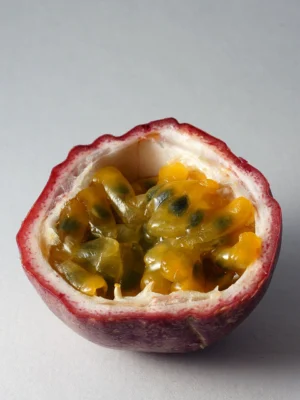
UK success depends on warmth and light through flowering and ripening. Outdoor survival in an exceptionally mild position does not establish that a vine will crop reliably. Treat the first season as establishment rather than promising a harvest date.
Indoors, use a soft clean brush to move pollen from anthers onto the receptive stigmas of an open flower. Use compatible pollen where required. The flower close up shows these central structures; hand pollination helps but cannot overcome unsuitable temperatures.
Let fruit develop its proper purple or yellow colour; fully green fruit is unripe. Ripe fruit may fall naturally, so collect promptly. Some wrinkling is normal as the skin loses water. Wash before cutting, use the pulp and seeds, discard spoiled fruit, and do not eat the rind, leaves or stems.
Photo: Filo gèn', CC BY-SA 4.0. Resized and optimised; cropped for display. Adapted image under the same licence.
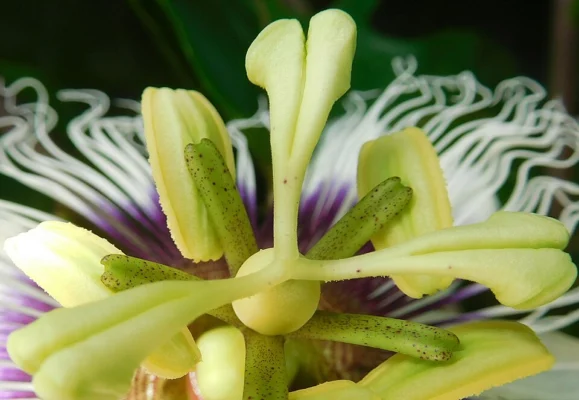
Check whether the plant needs cross pollination and whether pollen reached the stigmas. Indoor insect visits may be limited. Inadequate warmth, light or watering can also interfere with fruit set.
Late flowering or insufficient warmth can leave too little time for ripening. Maintain suitable protected conditions and wait for the correct mature colour; do not treat a green fruit as ready just because the calendar says autumn.
Glasshouse red spider mite thrives in hot dry conditions. Examine leaf undersides, avoid overcrowding and consider an appropriate biological control when an infestation is confirmed.
Glasshouse whitefly can multiply on protected plants. Inspect new arrivals and leaf undersides, monitor regularly and seek suitable biological control before populations become heavy.
Check blocked drainage, overwatering and a cold rootball. A struggling saturated plant needs its growing conditions corrected, not another automatic drink. Remove badly decayed material and investigate persistent decline.
Seed is an interesting project, with spring offering increasing light. Sow in moist free draining seed compost, covering lightly according to the packet. Chiltern Seeds recommends warm propagation around 26°C and warns that germination can be erratic, sometimes taking months. Seedlings do not guarantee a particular cultivar or quick fruiting.
For a known plant, take healthy semi ripe cuttings in summer with a firm base and softer tip. Remove lower leaves, insert in cuttings compost and keep warm, humid and bright out of direct sun. Ventilate as roots form and protect the young plants through winter.
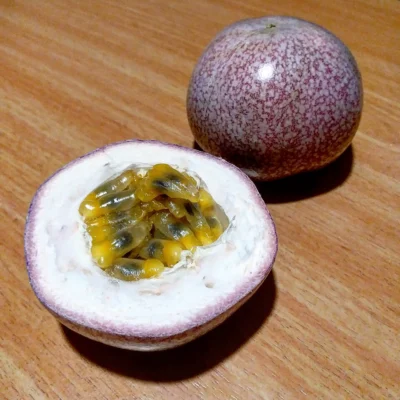
Purple fruiting P. edulis
The familiar purple fruit contains aromatic orange yellow pulp. A documented self compatible selection is useful where there is room for only one vine; confirm the nursery’s advice.
Whole and halved purple passionfruit; no named cultivar or UK harvest is claimed.
Photo: Azreey, CC BY-SA 4.0. Resized and optimised; cropped for display. Adapted image under the same licence.
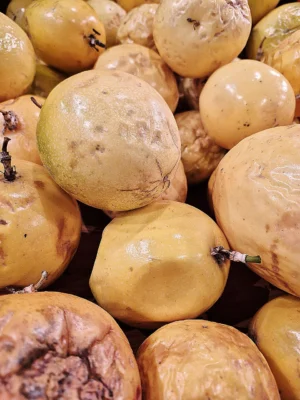
Yellow fruiting P. edulis
Often labelled P. edulis f. flavicarpa. These types generally require a compatible genetically different pollinator, so check space and suitability before choosing them.
Harvested yellow passionfruits with varying skin texture; a type illustration, not a named cultivar.
Photo: Bageense, CC BY 4.0. Resized and optimised; cropped for display.

Raise a vine from seed
An enjoyable propagation project if you have patience and warm space. Seedlings can vary, and there is no fixed promise of when or whether they will crop in your conditions.
A young P. edulis plant outdoors in a warm climate, illustrating juvenile growth rather than UK planting conditions.
Photo: Forest & Kim Starr, CC BY 3.0. Resized and optimised; cropped for display. Forest & Kim Starr
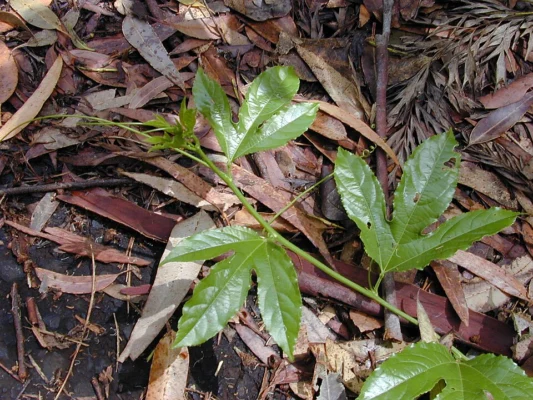
Start with a known parent plant
A nursery plant raised from cuttings retains the selected parent’s characteristics. Ask for its identity and pollination needs rather than relying on an attractive flower photograph.
Young P. edulis foliage; this photograph does not demonstrate a cutting or identify a cultivar.
Photo: Forest & Kim Starr, CC BY 3.0. Resized and optimised; cropped for display. Forest & Kim Starr
Ask for Passiflora edulis and check fruit colour, propagation method and pollination requirements. A hardy blue passionflower sold for an outdoor fence is a different choice from this protected fruit crop.
Passionflower flowers attract nectar seeking insects, but a closed greenhouse offers limited access. Use hand pollination for the crop rather than depending on the pollinators associated with commercial tropical growing regions.
Inspect for beneficial insects before treating pests and avoid routine broad spraying. Suitable glasshouse biological controls can help manage a confirmed problem alongside regular checks and good plant care.
Published by Buy From Farmers Direct. Growing guidance reviewed 6 October 2026. The seasonal timeline uses the shared BFFD Growers Calendar record; adjust timings to your variety and local conditions.
It is not a reliable outdoor fruit crop. Grow edible P. edulis in a bright heated greenhouse or conservatory, and regard ripe fruit as conditional on warmth, light and successful pollination.
Usually not. The familiar garden climber is often P. caerulea. This guide covers the tender fruit crop P. edulis; check the botanical label before using care or harvesting advice.
The RHS edible passionflower guidance recommends a minimum of 15°C. Its H1A rating reflects a plant requiring protected conditions all year, beyond ordinary frost protection.
It depends on the selection. Some purple types are self compatible, yellow types generally need a compatible genetically different vine, and hybrids vary. Confirm this before buying.
Look for its proper mature purple or yellow colour; ripe fruit may drop naturally. Some skin wrinkling can follow, but wrinkles alone do not prove that an unripe fruit has matured.
Seeds from ripe P. edulis fruit may germinate with warmth, but their variety and pollination behaviour are uncertain. A labelled nursery plant is a more predictable start if fruit is your main aim.
Start with a correctly identified vine, allow room for its growth and provide consistent protected warmth. Careful training and pollination give you the best opportunity to enjoy its flowers and, in a suitable season, ripe passionfruit.
Explore more growing guides: Blackberry, Cherry (Fan), Elderberry.
Want to get food independence, support your local grower, get better prices and shop more privately?
Local food isn’t just something you find. It’s something you protect. A free account helps keep local supply visible, supported, and resilient.

….it takes 30 seconds for food lovers and 5 minutes for suppliers
We built this for people who care where their food comes from. For people who want to remain food secure. For Farmers to get to the local people, who deserve a better income and to deliver a better price for you. For the environmentally conscious and the privacy-conscious. An account simply helps us make the map and supplier reach more useful to you, without changing how open it is. You’re always in control.


Find local food. Stay connected to it. Create a free account to support local producers and be part of a growing food network.


