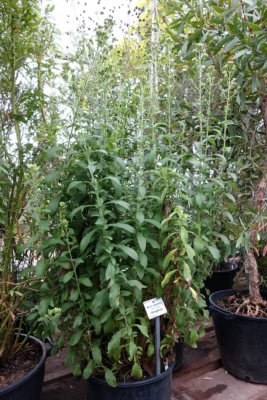
Stevia rebaudiana is a tender perennial with sweet tasting leaves and small white flowers. In the UK it is easiest to manage in a movable pot, spending summer somewhere warm and winter under frost free cover. A young plant offers a simpler start than its tiny seeds.
Tender perennial
Warm sheltered position
Good in a movable pot
Heated seed propagation
Protect from autumn cold
| Botanical name | Stevia rebaudiana |
| Family | Asteraceae, the daisy family |
| Other names | Candyleaf, sweetleaf and sweet herb |
| Plant type | Tender perennial, often treated as an annual |
| Main interest | Leafy growth and small white flowers |
| Typical height | About 30 to 60cm; older protected plants can grow taller |
| Typical spread | Allow about 45cm |
| Position | Sun or light partial shade in a warm sheltered spot |
| Soil | Fertile, moisture retentive but freely drained |
| Container choice | A drained pot that can be moved indoors |
| Practical seed season | March and April indoors with heat |
| Seed depth | Surface sow with only a very light covering |
| Germination temperature | Around 25 to 27°C; follow the packet |
| Germination time | Often 1 to 2 weeks in suitable conditions; results vary |
| Planting outside | Usually late May or June, after frost and cold nights |
| Leaf collection | Mainly June to September on established leafy plants |
| Flowering | Small white clusters later in the growing season |
| Pruning | Pinch growing tips to encourage branching |
| Winter position | Bright, sheltered and reliably frost free |
| Propagation | Seed or stem cuttings from healthy plants |
| Plant name | Crop type | Spacing |
Sow indoors
Plant outdoors
Harvest
Polytunnel | |||||||||||
|---|---|---|---|---|---|---|---|---|---|---|---|---|---|---|
| Jan | Feb | Mar | Apr | May | Jun | Jul | Aug | Sep | Oct | Nov | Dec | |||
| Stevia | Herbs | Allow about 45cm between mature plants; pot size increases with the rootball | No activity recorded | No activity recorded | Sow indoors | Sow indoors | Plant outdoors | Plant outdoors, Harvest | Harvest | Harvest | Harvest | No activity recorded | No activity recorded | No activity recorded |
Sow indoors: March, April. Plant outdoors: May, June. Harvest: June, July, August, September. Polytunnel: no months recorded.
March and April sowing requires indoor heat. Move plants outside in late May or June only when nights are warm and frost risk has passed. June to September leaf collection applies to established plants. A tunnel is optional; an unheated one may still freeze in winter.
Stevia suits a gardener who can provide warmth, watch watering and move a pot before cold weather. It can spend summer on a sunny patio, then return to a bright protected position.
Treat it as a seasonal plant if you cannot provide winter shelter. A healthy young plant avoids dedicating propagator space to a sometimes uneven seed batch.
Photo: Stratmains.emmanuel, CC BY-SA 4.0. Resized and optimised; cropped for display. Adapted image under the same licence.
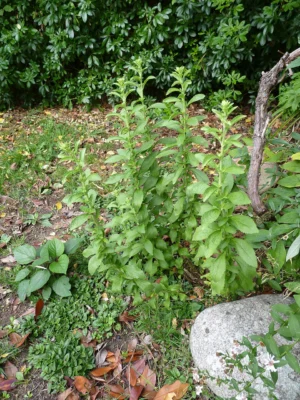
Choose a sheltered position with good light. A sunny patio or greenhouse helps in cooler districts, but ventilate enclosed spaces on hot days. Light afternoon shade can help a pot that repeatedly dries out.
Provide compost or soil that holds some moisture while draining readily. Avoid ground where rainwater collects. Stevia should not share the very dry treatment given to established thyme or rosemary.
Start with a container only a little larger than the rootball and pot on as roots fill it. Use fresh peat free compost and open drainage holes; keep outer pots from filling with water.
Allow roughly 45cm around a mature plant for branching and inspection. This is a practical allowance based on spread; individual plants will vary.
Photo: Mokkie, CC BY-SA 3.0. Resized and optimised; cropped for display. Adapted image under the same licence.
Begin with correctly labelled Stevia rebaudiana seed or a healthy young plant. Keep the supplier’s growing and use instructions with it.
1.
For a spring start, sow in March or April. Fill clean pots with fine peat free seed compost and moisten it first.
2.
Scatter seed on the surface, press gently and add only the lightest dusting of compost. Avoid burying the tiny seeds deeply.
3.
Use a propagator at about 25 to 27°C, following the seed packet. A clear cover helps hold moisture, but keep it out of scorching direct sunshine.
4.
Keep the surface moist without saturating it. Increase ventilation once seedlings appear, often in one or two weeks; not every seed will grow.
5.
Move seedlings into individual pots when large enough to handle. Support a leaf rather than squeezing the stem, and grow on in good light under cover.
6.
For a bought plant, inspect roots and foliage before potting. Water the rootball, set it at its previous level and firm gently.
7.
Accustom plants to outdoor conditions over about two weeks. Bring them under cover on cold nights and postpone outdoor placement until frost risk has passed.
8.
Space plants generously, water them in and label them. Pinch a growing tip once the plant is established to encourage side shoots, keeping enough foliage for strong growth.

Watering
Check compost before watering. Water thoroughly when the surface begins to dry, then let surplus water escape. Small pots need more frequent attention in summer than plants in a bed.
Wilting can mean dry roots or waterlogging. Feel below the surface first. A heavy wet pot needs drainage and time to recover, not another soaking.

Feeding
Fresh compost supplies initial nutrients. Once these are used, feed an actively growing container plant according to the label. Rich garden soil may need little extra help.
Do not try to correct cold conditions or poor light with stronger fertiliser. Pause feeding when winter growth slows and resume only as healthy new growth develops in spring.

Pruning
Pinch soft shoot tips above a leaf joint to encourage branching. Trim modestly and leave sufficient foliage rather than repeatedly cutting the plant bare.
For leafy growth, remove developing flower buds. Alternatively, let a few shoots flower to enjoy the small white clusters. Remove dead or damaged material with clean scissors.

Winter care
Move plants under cover before autumn cold. Provide good light and a reliably frost free position; a shed or unheated greenhouse may still freeze.
Water sparingly as growth slows, keeping roots from becoming completely dry. Clear fallen leaves and inspect for pests. In spring, wait for new growth before deciding which stems need trimming.
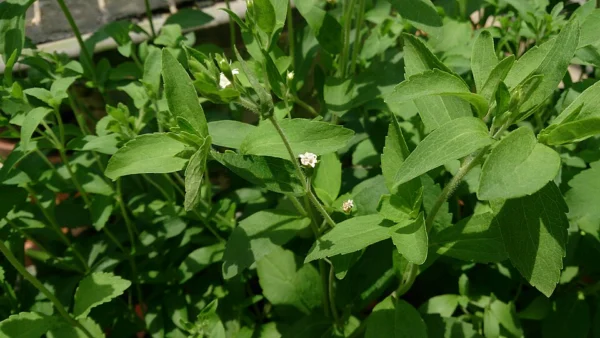
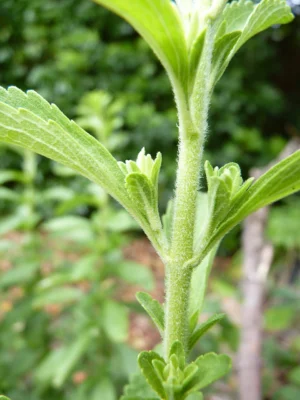
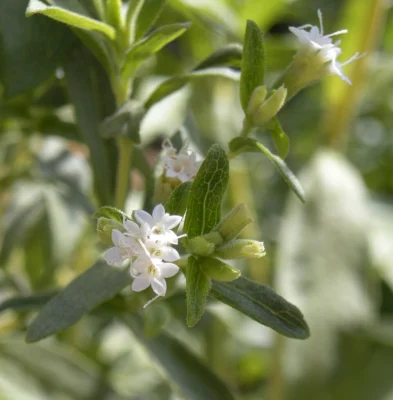
Stevia has paired green leaves, usually oval to narrowly pointed, with toothed edges and a slightly hairy surface. Older shoots branch and may carry loose clusters of small tubular white flowers.
Buy reliably labelled cultivated Stevia rebaudiana. Appearance alone does not establish identity or a named cultivar; keep labels if comparing selections.
Photo: Stratmains.emmanuel, CC BY-SA 4.0. Resized and optimised; cropped for display. Adapted image under the same licence.
Warmth is the main practical limit in Britain. Surviving a marginal position does not guarantee useful leafy growth. In cool summers, well ventilated cover may suit a pot better than a chilly outdoor bed.
Collect leaves or short shoots after establishment, leaving plenty of foliage to regrow. June to September describes the main active period; a late start or cold summer will shorten it.
Keep garden leaves distinct from manufactured stevia sweeteners, which use processed steviol glycosides. Suppliers differ in how they market their plants: follow the product’s use instructions and do not use stock labelled ornamental only as food. Growing a plant does not reproduce the composition of a commercial sweetener.
Photo: Ethel Aardvark, CC BY 3.0. Resized and optimised; cropped for display.
Check compost temperature, sowing depth and moisture. Windowsills can swing between cold nights and excessive daytime heat. Use fresh seed and allow for variable germination rather than repeatedly soaking the tray.
Move the plant somewhere frost free and avoid feeding damaged growth. Wait for signs of recovery before pruning heavily. Protecting the rootball before frost is more dependable than trying to rescue it afterwards.
Check drainage holes and empty the saucer. Persistently saturated compost can damage roots. Remove dead material and reduce watering; do not interpret every wilt as a need for another soaking.
Thrips may be involved. Inspect leaf undersides and shoot tips, isolate an affected indoor plant and identify the insect. Appropriate biological controls can help under glass; treatments must suit the plant’s intended use.
Slugs can damage tender stevia, especially after it moves outdoors. Inspect pots and nearby hiding places in the evening, remove offenders around vulnerable plants and keep the surrounding area accessible for checks.
Stem cuttings preserve the characteristics of a plant you like. In late spring or early summer, take a healthy non flowering shoot about 5 to 10cm long, trim below a leaf joint and remove lower leaves. Insert it into moist peat free cuttings compost.
Keep cuttings warm and humid in bright indirect light, ventilating regularly. Pot them individually once rooted. Seedlings can vary and may not reproduce a selected parent exactly.
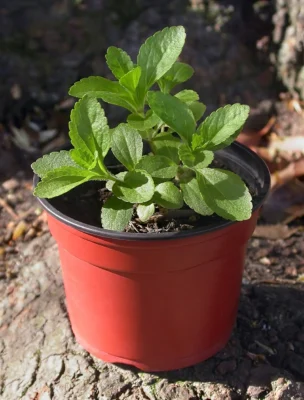
Start with a young plant
A healthy rooted plant avoids uncertain germination. Check shoots and roots, then gradually adjust it to your growing position.
A young potted stevia plant; no named cultivar is claimed.
Photo: Gabriela F. Ruellan, CC0. Resized and optimised; cropped for display.
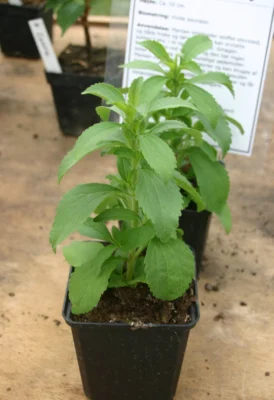
Raise your own from seed
A useful project with a heated propagator and room to grow seedlings on. Label the sowing date and follow your packet.
Illustrative potted stevia under glass; its propagation method is not documented.
Photo: Sten Porse, CC BY-SA 3.0. Resized and optimised; cropped for display. Adapted image under the same licence.
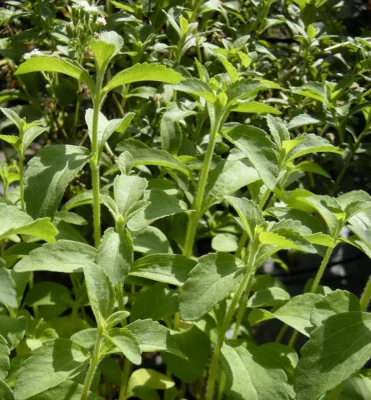
Keep a summer patio pot
Move a container into summer shelter and bring it inside as nights cool. Watch moisture carefully as leafy growth increases.
Stevia foliage illustrating the leafy summer growth stage.
Photo: Ethel Aardvark, CC BY 3.0. Resized and optimised; cropped for display.
Compare young plants with seed according to your propagation space. Check botanical identity, growing instructions and the supplier’s stated intended use.
Let some shoots flower if you enjoy watching the plant’s full growing cycle. Its tiny flower clusters also make an interesting contrast with the much larger leaves.
Keep a mix of other flowering plants nearby to support visiting insects through the season. Inspect any pest problem before acting, and use targeted management around affected plants.
Published by Buy From Farmers Direct. Growing guidance reviewed 6 October 2026. The seasonal timeline uses the shared BFFD Growers Calendar record; adjust timings to your variety and local conditions.
Do not rely on it. Treat it as tender and move a container into a bright frost free position before autumn cold.
It needs warmth, shallow sowing and careful moisture. Germination can be uneven; a young rooted plant is usually the simpler route.
It can be kept under protection, but needs strong light, room and attentive watering. A warm dim room often produces weak, stretched growth.
Remove buds if you want to encourage leafy growth, or retain some shoots for their small white flowers. Avoid stripping the whole plant.
Wait until the plant has established and is growing strongly. Take modest amounts during the warm growing season and leave plenty of leaves to regrow.
No. Commercial sweeteners use processed ingredients with specified compositions. Follow the plant supplier’s use label and do not treat ornamental-only stock as a food product.
Give stevia steady warmth, good light and a movable pot. Small regular checks make its summer growth and winter protection much easier to manage.
Explore more growing guides: Chives, Coriander, Fennel (Herb).
Want to get food independence, support your local grower, get better prices and shop more privately?
Local food isn’t just something you find. It’s something you protect. A free account helps keep local supply visible, supported, and resilient.

….it takes 30 seconds for food lovers and 5 minutes for suppliers
We built this for people who care where their food comes from. For people who want to remain food secure. For Farmers to get to the local people, who deserve a better income and to deliver a better price for you. For the environmentally conscious and the privacy-conscious. An account simply helps us make the map and supplier reach more useful to you, without changing how open it is. You’re always in control.


Find local food. Stay connected to it. Create a free account to support local producers and be part of a growing food network.