Strawflowers bring the feel of dried flowers into a living summer border. The coloured papery parts around each head are bracts, and they keep their shape and colour well after cutting. Tall seed strains make useful cutting plants, while shorter selections suit pots. In the UK, most gardeners raise fresh plants each spring and enjoy them until autumn frost.
Papery everlasting flowers
Sunny cutting patch
Frost-sensitive young plants
Useful fresh or dried
Choose height before buying
| Botanical identity | Xerochrysum bracteatum |
| Family | Asteraceae |
| Plant type | Tender perennial usually grown as an annual |
| Typical height | 30 to 100cm, by selection |
| Typical spread | 25 to 45cm |
| Main flowering season | Summer to autumn |
| Light | Full sun |
| Soil | Fertile but well-drained |
| Soil reaction | Slightly acid to neutral generally suitable |
| Winter behaviour | Protect from frost |
| Main planting window | Late May to June after frost |
| Seed route | Sow March to April under cover |
| Pruning approach | Deadhead or cut regularly |
| Propagation | Seed; cuttings for suitable named selections |
| Container suitability | Compact selections suit pots |
| Watering priority | Steady moisture during establishment |
| Feeding priority | Moderate feeding; avoid excessive nitrogen |
| Wildlife value | Open centres attract insects |
| Main use | Fresh and dried flower arrangements |
| Important distinction | Strawflower is Xerochrysum bracteatum, also sold under Helichrysum or Bracteantha; it is an ornamental cutting plant. |
| Plant name | Crop type | Spacing |
Sow indoors
Plant outdoors
Harvest
Polytunnel | |||||||||||
|---|---|---|---|---|---|---|---|---|---|---|---|---|---|---|
| Jan | Feb | Mar | Apr | May | Jun | Jul | Aug | Sep | Oct | Nov | Dec | |||
| Strawflower | Not recorded | Single 30cm, In row 30cm, Row gap 40cm | No activity recorded | No activity recorded | Sow indoors, Polytunnel | Sow indoors, Polytunnel | Plant outdoors, Polytunnel | Plant outdoors | Harvest | Harvest | Harvest | Harvest | No activity recorded | No activity recorded |
Sow indoors: March, April. Plant outdoors: May, June. Harvest: July, August, September, October. Polytunnel: March, April, May.
Sow in March to April with suitable germination warmth, then harden off and plant in late May or June once frost danger has passed. The March to May cover band is seedling protection, not a claim that an unheated tunnel is frost free. July to October harvest means ornamental flower cutting; flowering and the final cut depend on sowing date and frost. These month bands are planning windows for a typical UK garden; local frost, altitude, exposure and the season can move the work. Check the plant or seed label before using an optional route.
Use tall strawflowers in a dedicated cutting patch where stems can be reached regularly without disturbing a formal display.
Compact types suit sunny pots and border fronts, giving long-lasting colour while individual heads mature at different rates.
Photo: Bryce Watts-Parker, CC BY 4.0. Resized and optimised; cropped for display.
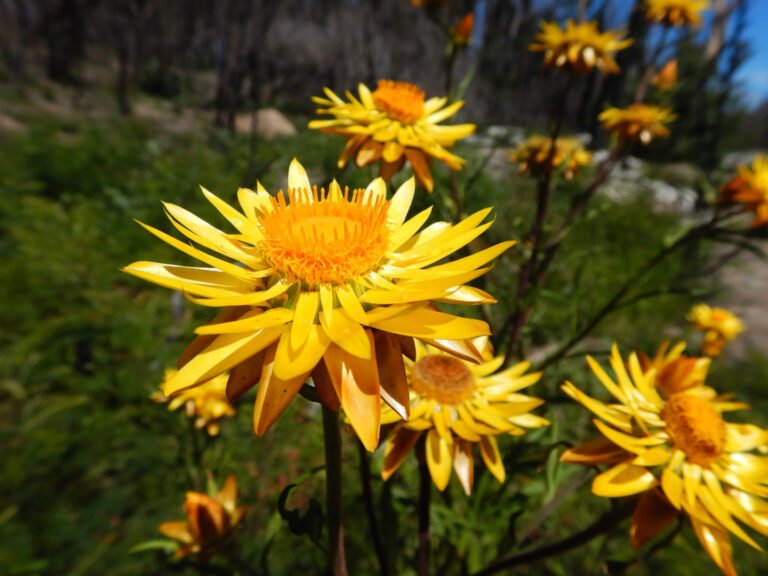
Provide full sun and some shelter from strong wind. Taller stems are easier to cut intact when they have support. A cutting patch works best when stems can be reached from a path on either side. Avoid leaning across neighbouring flowers to gather the central plants: their papery heads can be crushed even though they look unusually robust.
Choose well-drained soil that holds enough moisture for steady summer growth. Cold saturated ground is unsuitable for tender young roots.
Allow about 30cm between medium plants and more for vigorous tall selections. Crowding makes cutting and airflow difficult.
Use a reasonably deep container and choose a compact selection. A tall cutting strain in a tiny pot is harder to keep stable.
Photo: Paul Whitington, CC BY 4.0. Resized and optimised; cropped for display.

Begin with correctly labelled strawflower and decide where the mature plant will fit. Preparing the growing space before buying makes the first season easier, especially when young plants need prompt attention.
1.
Choose a strain with the height and colours wanted for borders or cutting.
2.
Sow in spring into fresh peat-free seed compost, following the packet’s light and covering requirements.
3.
Keep germinating seed warm enough and avoid saturated compost.
4.
Prick out or pot on young plants before their roots become tightly crowded.
5.
Harden plants off gradually and plant only after local frost risk has passed.
6.
Keep the rootball intact and set plants at their previous compost level.
7.
Install light support around tall plants before their stems begin to lean. A simple horizontal support mesh can help a row of tall plants, provided it is installed while stems are small enough to grow through it naturally. Compact pot selections generally need a different, much lighter approach.
8.
Cut or deadhead regularly while keeping some open heads for visiting insects.

Watering
Keep seedlings evenly moist and water newly planted strawflowers until rooted. Established plants tolerate some dryness but flower better without repeated severe stress.
Water the compost around container plants, keeping the foliage and mature flower heads as dry as practical during prolonged damp weather.

Feeding
Prepare reasonably fertile soil before planting. Excess nitrogen can favour soft growth over strong, useful flower stems.
Container plants may need a measured flowering-plant feed as the initial compost nutrients decline. Follow the chosen product rather than combining several feeds.

Pruning
Cut flowers regularly or remove spent heads to encourage further growth. Take stems above a healthy leaf joint where possible.
For drying, choose fresh heads before they become overmature. Remove leaves from the cut stems and dry small bunches in an airy shaded place. The bracts continue to move as moisture changes, so test several heads rather than using colour alone as a cutting signal. Keep a note of which stage dried best; overmature open centres can look less tidy in a stored arrangement.

Winter care
Most UK displays finish with frost and are cleared afterwards. Save healthy ripe seed if wanted, recognising that named selections may not come true.
Keeping a valuable tender perennial selection requires bright frost-free conditions and restrained watering. For ordinary seed strains, resowing is usually simpler.
The daisy-like head has a central disc surrounded by stiff, papery coloured bracts. These feel different from the soft petals of most summer annuals.
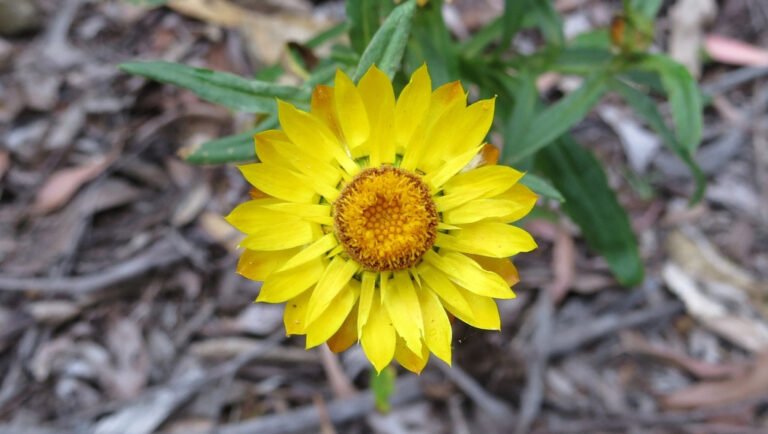
Delay planting in northern or exposed gardens until nights are reliably mild. A bright protected start is useful, but drawn seedlings need gradual acclimatisation.
Cut on a dry day after surface moisture has gone. Check stems as well as flower colour: immature floppy stems are less useful for hanging and arranging.
Dry flowers away from damp walls and direct sun. Store finished material loosely and fully dry so condensation does not spoil the bracts. Separate colours into small labelled batches if they are intended for later projects. Check the drying room after damp weather, since an apparently dry flower can absorb moisture again. Avoid sealed plastic until the material is fully dry.
Photo: Duncan Cunningham, CC BY 4.0. Resized and optimised; cropped for display.
Improve light promptly and avoid excessive warmth after germination. Space pots apart; crowded seedlings leaning towards a window rarely make strong cutting plants.
Inspect for slugs and snails around newly planted stock. Protect plants during establishment rather than waiting until only stem stubs remain.
Use support early and avoid excessive nitrogen. Wind exposure and overcrowding can both produce a tangle that is difficult to correct once flowers are open.
Remove spoiled heads and improve airflow. Avoid packing wet cut flowers into dense bunches or enclosing them before they have dried thoroughly.
Heads may have been cut too late, or dried in humid conditions. Trial a few stages and keep small batches separated so you can compare results.
Sow fresh seed in spring for the simplest seasonal crop. Use a labelled seed strain when a reasonably predictable height or colour range matters.
Some perennial selections can be increased by cuttings under suitable protected conditions. Seed collected from a named or hybrid plant may produce variable offspring. Before preserving a patio selection, check whether its compactness is a stable cultivar characteristic and whether vegetative propagation is appropriate. A seed mixture chosen for long stems is a different purchase from a named compact nursery plant.
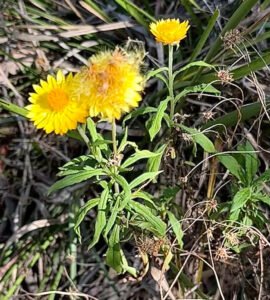
Monstrosum Series
Tall seed-raised plants with large papery heads in a range of colours. Check the packet’s expected height before placing them in a small border.
Yellow strawflower species photograph; Monstrosum Series identity is not authenticated.
Photo: prossington, CC BY 4.0. Resized and optimised; cropped for display.
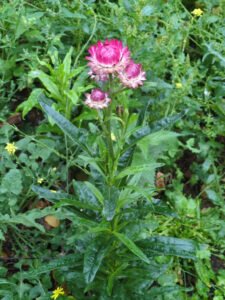
Salmon Rose
A named colour selection for softer pink arrangements. Buy labelled seed or plants; a photograph of another pink strawflower does not confirm its identity.
Pink strawflower shown for comparison; Salmon Rose seed strain identity is not authenticated.
Photo: guywallbanks, CC BY 4.0. Resized and optimised; cropped for display.

White-flowered selections
White heads combine readily with other dried material. Choose the named supplier strain and assess its height rather than assuming every white selection is compact.
Yellow strawflowers shown for comparison. White flowered selections have a different bract colour.
Photo: SatNavSaysStraightOn, CC BY 4.0. Resized and optimised; cropped for display.
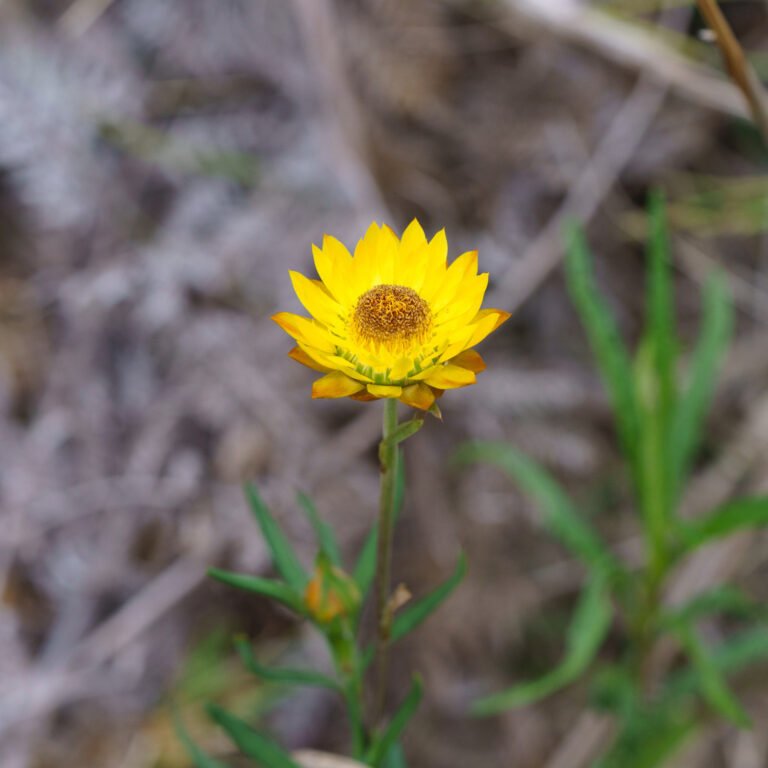
Compact patio selections
Shorter forms are easier to accommodate in containers. They provide colour close to a seating area but are less suitable when long cutting stems are the priority.
Strawflower species photograph; compact patio habit is not authenticated.
Photo: Kym Nicolson, CC BY 4.0. Resized and optimised; cropped for display.
Compare the mature size, growing requirements and season of interest before choosing strawflower. Buy clearly labelled, healthy stock and prepare its position in advance. A plant suited to the available light and soil is easier to establish and maintain.
Single or less crowded heads with accessible centres can be visited by pollinating insects. Leave part of the crop open while cutting other stems for arrangements.
Combine strawflowers with flowers opening earlier in the season. Avoid unnecessary insect treatments and allow a few healthy heads to ripen if seed and late garden interest are wanted.
Published by Buy From Farmers Direct. Growing guidance reviewed 11 October 2026. The seasonal timeline uses the shared BFFD Growers Calendar record; adjust timings to your variety and local conditions.
Their coloured bracts are naturally papery. Living stems and centres still contain moisture, so cut flowers must dry properly before storage.
March or April under suitable cover is a practical UK route, with planting after frost in late May or June.
They are usually grown as annuals in the UK. Valuable perennial selections need bright frost-free protection.
Cut fresh heads before they are overmature, strip stem leaves and hang small bunches somewhere dry, airy and shaded.
Yes. Choose a compact selection and a stable drained pot, and check moisture regularly.
It means cutting ornamental flowers for fresh or dried display. This guide does not recommend eating the plant.
Give strawflower an appropriate position, establish it carefully and adjust care to the weather. Keep a simple note of flowering and any problems so that next year’s planting decisions reflect what actually succeeds in your garden.
Explore more growing guides: Zinnia, Sunflower, Sweet William.
Want to get food independence, support your local grower, get better prices and shop more privately?
Local food isn’t just something you find. It’s something you protect. A free account helps keep local supply visible, supported, and resilient.

….it takes 30 seconds for food lovers and 5 minutes for suppliers
We built this for people who care where their food comes from. For people who want to remain food secure. For Farmers to get to the local people, who deserve a better income and to deliver a better price for you. For the environmentally conscious and the privacy-conscious. An account simply helps us make the map and supplier reach more useful to you, without changing how open it is. You’re always in control.


Find local food. Stay connected to it. Create a free account to support local producers and be part of a growing food network.


