Annual sunflowers bring height, colour and a clear sense of the season to a garden. A compact pot variety and a towering single stem need very different spaces, so choose the plant before choosing the position. Start with good light, establish sturdy roots and support tall plants before the flower heads become heavy.
Annual Helianthus
Full sun
Choose the right height
Protect young plants
Flowers and seed heads
| Botanical name | Helianthus annuus and annual garden hybrids |
| Family | Asteraceae |
| Life cycle | Annual |
| Position | Full sun |
| Soil | Fertile, moist and well drained |
| Protected sowing | Late March to May |
| Direct sowing | April to May when conditions allow |
| Planting out | May to June after local frost risk |
| Sowing depth | About 1.5 to 2cm, or as the packet directs |
| Height | From compact plants to several metres |
| Spacing | Usually 30 to 60cm; check the variety |
| Main flowering | July to September, often into October |
| Cut flower harvest | During the flowering season |
| Seed harvest | Late summer to autumn if seeds ripen |
| Watering | Regular while establishing; more in dry spells |
| Feeding | According to soil and container needs |
| Support | Stake tall varieties early |
| Pinching | Optional for branching types only |
| Containers | Choose compact varieties and a large pot |
| Winter | Annual plants finish after flowering and frost |
| Plant name | Crop type | Spacing |
Sow indoors
Plant outdoors
Harvest
Polytunnel | |||||||||||
|---|---|---|---|---|---|---|---|---|---|---|---|---|---|---|
| Jan | Feb | Mar | Apr | May | Jun | Jul | Aug | Sep | Oct | Nov | Dec | |||
| Sunflower | Not recorded | Usually 30 to 60cm; follow the variety | No activity recorded | No activity recorded | Sow indoors, Polytunnel | Sow indoors, Polytunnel | Sow indoors, Plant outdoors, Polytunnel | Plant outdoors, Polytunnel | Harvest | Harvest | Harvest | Harvest | No activity recorded | No activity recorded |
Sow indoors: March, April, May. Plant outdoors: May, June. Harvest: July, August, September, October. Polytunnel: March, April, May, June.
The sowing band runs from March to May; March means a protected start. Plant young plants outside in May or June after local frost risk. The July to October harvest band covers cut flowers and, later, ripe seed heads where the season allows. Polytunnel months refer to raising young plants.
Sunflowers suit a sunny border, vegetable plot or roomy container. Compact varieties work well near a patio, while tall plants make a strong backdrop where their shade will not overwhelm smaller crops.
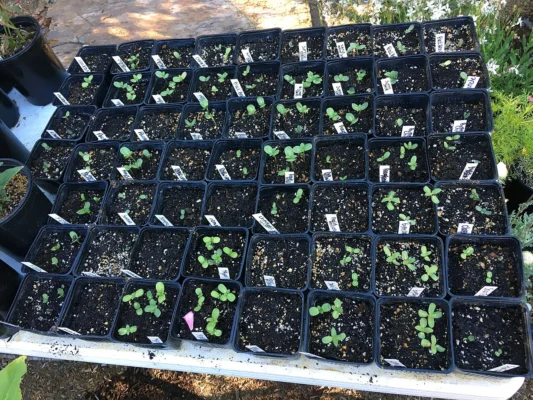
Find a sunny position with shelter from the strongest winds. A tall sunflower near a path needs enough space for its mature head and any supporting stake.
Prepare soil with mature compost where needed. Roots benefit from reliable moisture, but a planting hole that stays waterlogged is unsuitable.
Allow the spacing on the packet, often around 30 to 60cm. Give particularly large or branching plants more room instead of placing them tightly beside competing shrubs.
For pots, choose a compact cultivar and a large, stable container with drainage holes. Use suitable peat free compost and leave space below the rim for thorough watering.
Photo: Achim Hering, CC BY 3.0. Resized and optimised; cropped for display.
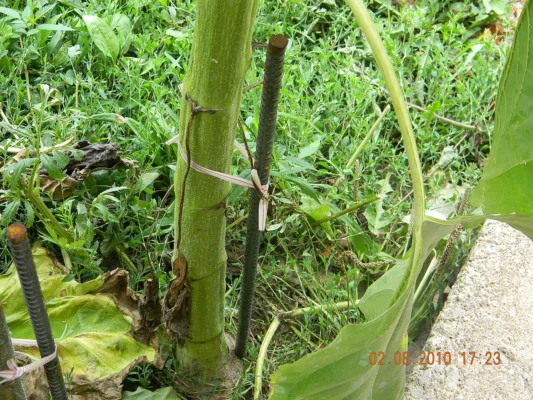
Sow one or two seeds in a pot or a prepared outdoor station, then keep the strongest plant. A protected start can help where birds, rodents or slugs make direct sowing unreliable.
1.
Read the variety’s height, branching habit and flower description before sowing. Match it to the space and whether you want a garden display, cut flowers or ripe seed heads.
2.
For a protected start from late March, fill individual pots with moist peat free compost. Sow at the packet depth, commonly around 1.5 to 2cm.
3.
Keep pots bright and suitably warm for germination. Once shoots appear, give them as much useful daylight as possible so stems remain sturdy.
4.
Retain a strong plant in each pot and move it into more root space if needed. Do not let a tall seedling spend weeks cramped in a tiny cell.
5.
For direct sowing in April or May, wait for workable, warming soil. Sow where the plants will grow and protect the young shoots if local wildlife is removing them.
6.
Harden sheltered plants off gradually. Plant outside once local frost risk has passed, preserving the rootball and watering it before and after the move.
7.
Install a suitable stake early for tall varieties, keeping it clear of the main rootball. Tie the stem loosely with soft material and check ties as growth thickens.
8.
Water during establishment and inspect for slug damage. Keep surrounding weeds small so young roots do not immediately compete for every drop of moisture.

Watering
Check young plants and pots frequently during dry weather. Water the root zone thoroughly rather than wetting only the upper centimetre of compost.
Large leaves and flower heads put demand on container roots. Keep moisture steady through flowering, while allowing excess water to drain away.

Feeding
A fertile bed may need little additional feeding. Use soil condition and growth as a guide rather than treating maximum height as a reason for unlimited fertiliser.
Container plants may need a suitable regular feed after the compost’s initial nutrients decline. Follow the label and keep watering consistent.

Pruning
Do not pinch out a single stem sunflower if you want its one main head. Branching varieties can be pinched when young if the chosen growing method calls for more side shoots.
Cut flowers or remove faded heads on branching plants to encourage continued display. Leave selected sound heads if you want seeds to ripen for birds or future sowing.

Winter care
Annual sunflowers do not restart from the same roots next spring. Remove spent plants when they have finished, or retain safe standing stems briefly where their structure provides shelter.
Dry any saved seeds fully before storing them in labelled paper packets. Keep seed intended for sowing separate from treated commercial planting seed, which is not food.
Annual sunflowers have sturdy stems, rough leaves and flower heads made from many tiny florets. The familiar yellow rays surround the central disc, but garden varieties also include other colours and double forms.
Perennial Helianthus species return from established roots and need a different long term plan. This guide covers the annual garden crop, so check the botanical label if buying a perennial plant.
Photo: Tomascastelazo, CC BY-SA 4.0. Resized and optimised; cropped for display. Adapted image under the same licence.

Direct sowing is easiest once soil warms, while a protected start gives a useful head start in shorter growing seasons. Avoid trading that advantage for weak, overcrowded seedlings.
An exposed coastal or upland garden may suit a shorter variety better than an exhibition giant. Support and shelter matter increasingly as the head gains weight.
Cut flower stems in cool conditions and place them promptly in clean water. For seed, wait until the back of a head matures and the seeds are developed; cool wet autumns can limit ripening.
Photo: Flappy Pigeon, CC BY-SA 4.0. Resized and optimised; cropped for display. Adapted image under the same licence.
Inspect for slugs and other damage. Protect vulnerable plants and consider raising replacements in pots if direct sowings repeatedly disappear.
Check light, crowding and root space. A sunny window does not help if several seedlings shade one another in a small pot.
Support may be insufficient for wind and head weight. Stake before plants become top heavy and use soft ties that do not cut into the stem.
Check compost moisture and drainage first. A large sunflower can exhaust a small pot quickly, but waterlogged roots can also cause wilting.
Variety, pollination and autumn weather all matter. Not every ornamental variety provides a useful seed harvest, and a flowering head is not proof of ripe grain.
Annual sunflowers are grown from seed each year. Use labelled seed for predictable height and habit, especially when space is limited.
Saved seed can differ from the parent because varieties may cross and hybrids do not reliably repeat. Keep the experiment separate from a carefully planned display.

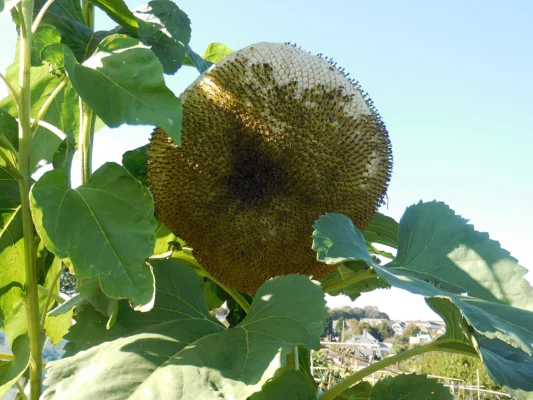
Giant single-head types
Choose these for height and large heads. They need room, moisture and sturdy support, and are less suitable for small patio pots.
The source identifies this flower as Mammoth Russian; the close view does not establish the whole plant’s size or branching habit.
Photo: Rob Duval, CC BY-SA 3.0. Resized and optimised; cropped for display. Adapted image under the same licence.
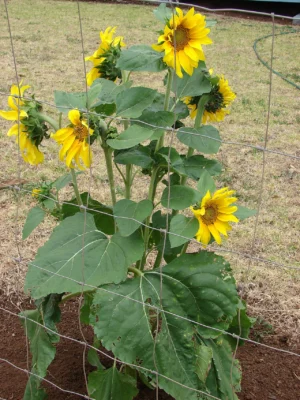
Branching cutting types
These produce repeated stems rather than one dominant head. Allow room for side branches and cut regularly if flowers are the main purpose.
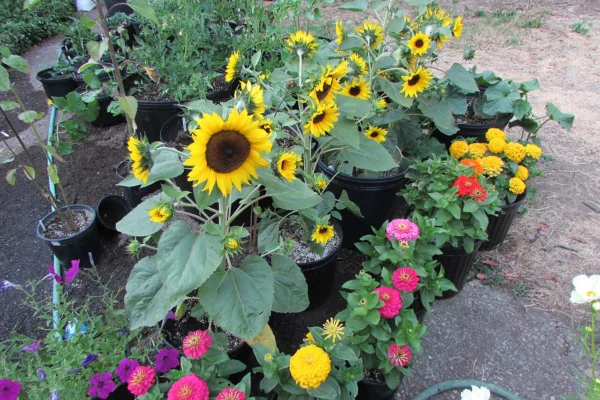
This Helianthus annuus photograph illustrates a plant carrying several flower heads, without identifying a named cultivar.
Photo: Forest & Kim Starr, CC BY 3.0. Resized and optimised; cropped for display.
Dwarf patio types
Compact plants are easier to manage in containers. Check the actual packet height, since dwarf means different things across seed ranges.
The source identifies these compact sunflowers as Orange Hobbit.
Photo: Don McCulley, CC BY-SA 4.0. Resized and optimised; cropped for display. Adapted image under the same licence.

Seed-producing food cultivars
Choose a labelled edible-seed type when seed harvest matters. Grow with food-appropriate inputs and keep sowing seed separate from harvested kitchen seed.
Sunflower kernels beside seeds in their shells. Treated planting seed is not food.
Photo: ABF, CC BY-SA 3.0. Resized and optimised; cropped for display. Adapted image under the same licence.
Measure the growing space and consider wind, shade and watering access. Then choose a sunflower whose mature size fits the garden.
Many open centred sunflower varieties provide pollen and nectar for insects. Flower form matters: densely doubled blooms may offer less accessible food.
Leave sound mature seed heads for birds where they can be supported safely. Remove loose netting and keep any protection secure and regularly checked.
Published by Buy From Farmers Direct. Growing guidance reviewed 7 October 2026. The seasonal timeline uses the shared BFFD Growers Calendar record; adjust timings to your variety and local conditions.
Start in pots from late March or sow outside in April and May when soil and weather are suitable. Follow the variety and your local season.
Yes. A compact variety in a large stable pot is the simplest choice. Check moisture frequently and feed according to the compost and product instructions.
Only when deliberately encouraging a branching plant. Leave a single stem variety intact if you want its one main flower.
It may be reaching for light, competing in a crowded pot or lacking support. Check those conditions before simply adding another tie.
The annual sunflowers covered here will not. Perennial Helianthus are different plants with a different growing cycle.
Yes, when seeds fully mature and dry. Seed from hybrids or mixed varieties may produce different plants the following year.
A sunflower is easier to enjoy when its roots, stem and flower head all have the room they need. Give it sun, steady establishment and timely support, then decide which heads to cut and which to leave for seed.
Explore more growing guides: Zinnia, Strawflower, Sweet Pea.
Want to get food independence, support your local grower, get better prices and shop more privately?
Local food isn’t just something you find. It’s something you protect. A free account helps keep local supply visible, supported, and resilient.

….it takes 30 seconds for food lovers and 5 minutes for suppliers
We built this for people who care where their food comes from. For people who want to remain food secure. For Farmers to get to the local people, who deserve a better income and to deliver a better price for you. For the environmentally conscious and the privacy-conscious. An account simply helps us make the map and supplier reach more useful to you, without changing how open it is. You’re always in control.


Find local food. Stay connected to it. Create a free account to support local producers and be part of a growing food network.


