Follow us:

British Mushrooms & Foraging

British mushrooms deserve more attention than they often receive.

For many shoppers, mushrooms appear as a simple supermarket staple. They are picked up for breakfasts, pasta, soups, sauces, risottos, stir fries and Sunday roasts without much thought about where they were grown or who produced them. Yet mushroom growing is a skilled and highly controlled form of food production. It relies on careful management of growing conditions, timing, freshness, hygiene, substrate, humidity and harvest quality. Whether the mushrooms are button, chestnut, oyster, shiitake, lion’s mane, king oyster or mixed specialist varieties, there is usually far more behind them than a small punnet suggests. Buy From Farmers Direct is being built to help people understand British mushrooms properly and find mushroom growers, farm shops, markets and specialist suppliers with clearer links between food, growing and trust.
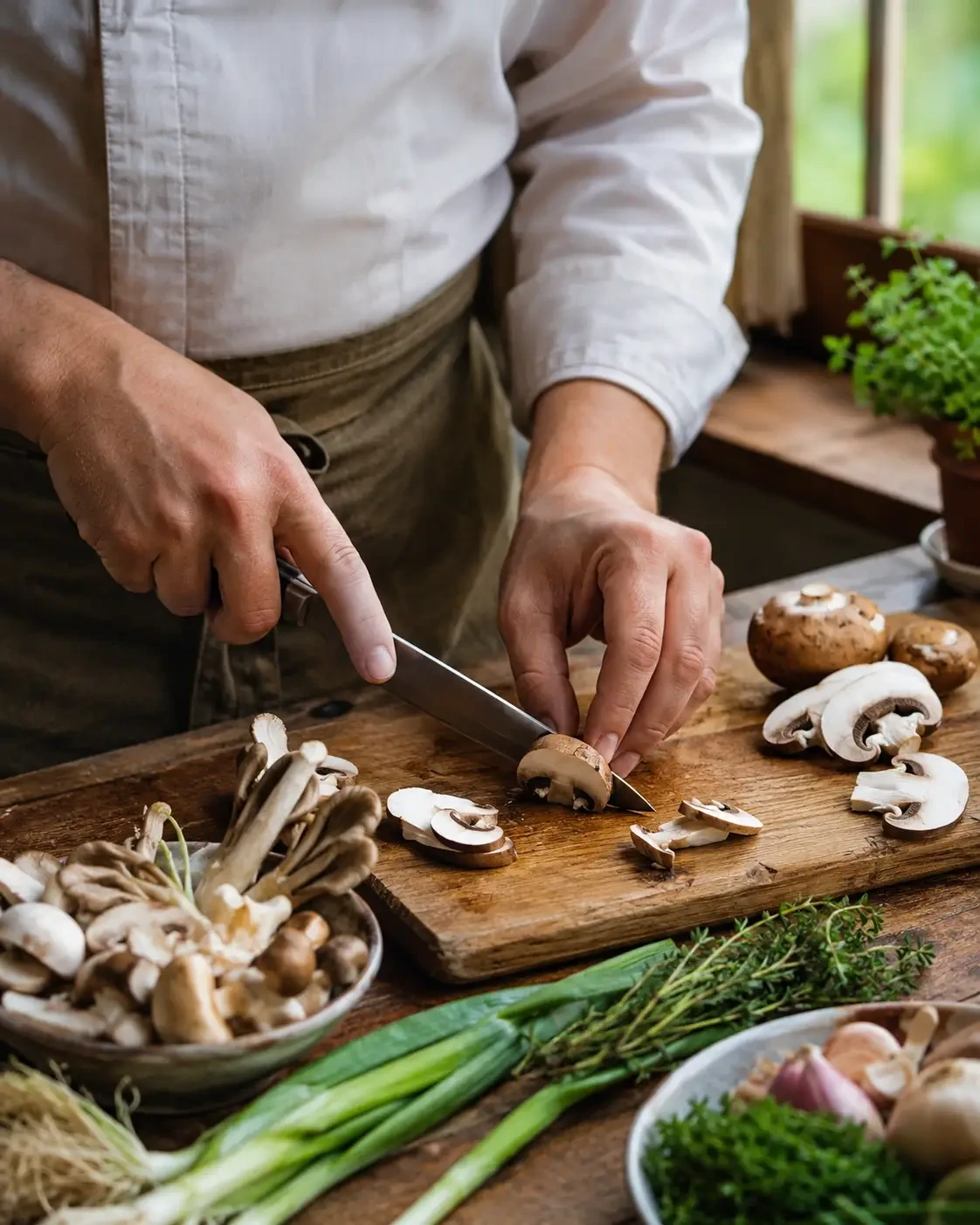
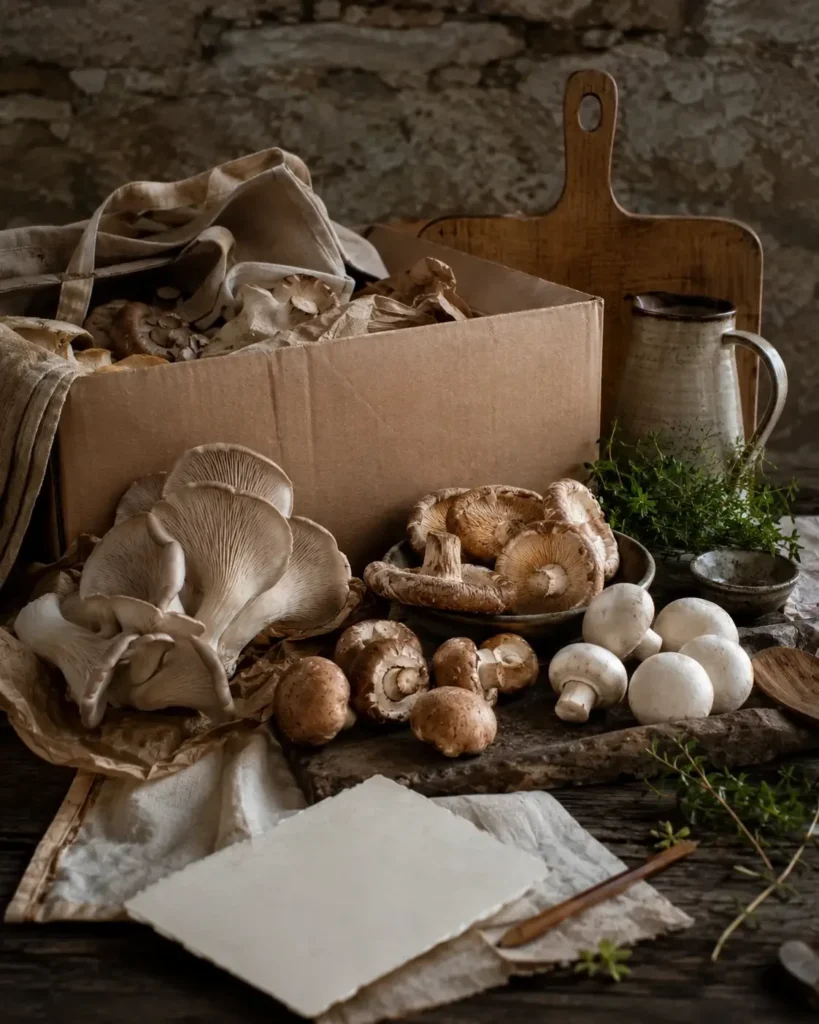
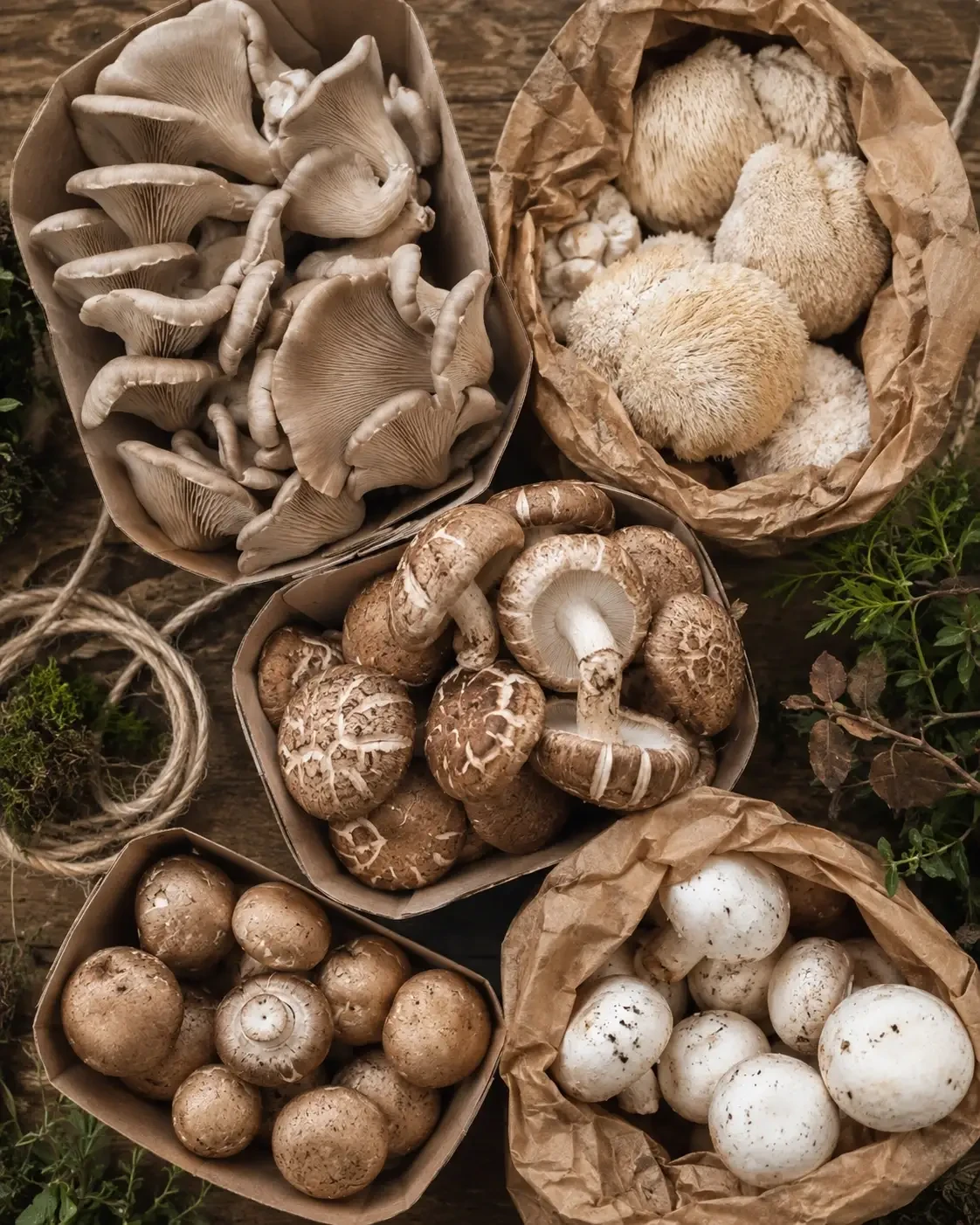
British mushrooms are mushrooms grown in Britain. They may be familiar varieties such as button, closed cup, chestnut and portobello mushrooms, or specialist varieties such as oyster, shiitake, lion’s mane and king oyster. British mushrooms are not automatically local, organic, wild or gourmet, so shoppers should check who grew or supplied them, where they were grown, whether they are fresh or dried, how they should be stored and whether they are sold direct, through farm shops, markets, veg boxes or online suppliers.

What Is A British Mushroom?

British mushrooms usually means mushrooms grown in Britain.
That sounds simple, but it is still worth explaining. A mushroom can be British without being local to your town or county. It can be local but not organic. It can be British and gourmet. It can be British and sold online. It can also be sold through a farm shop, market, restaurant supplier or independent retailer without the grower story being visible.
The strongest suppliers go further than simply using the word British. They explain who grew the mushrooms, where they were grown, what varieties are available, whether the mushrooms are fresh or dried, and how customers can buy them.
That extra detail is where trust begins.

Why British Mushrooms Matter

British mushrooms matter because they show that food production is not limited to fields, orchards and livestock farms.
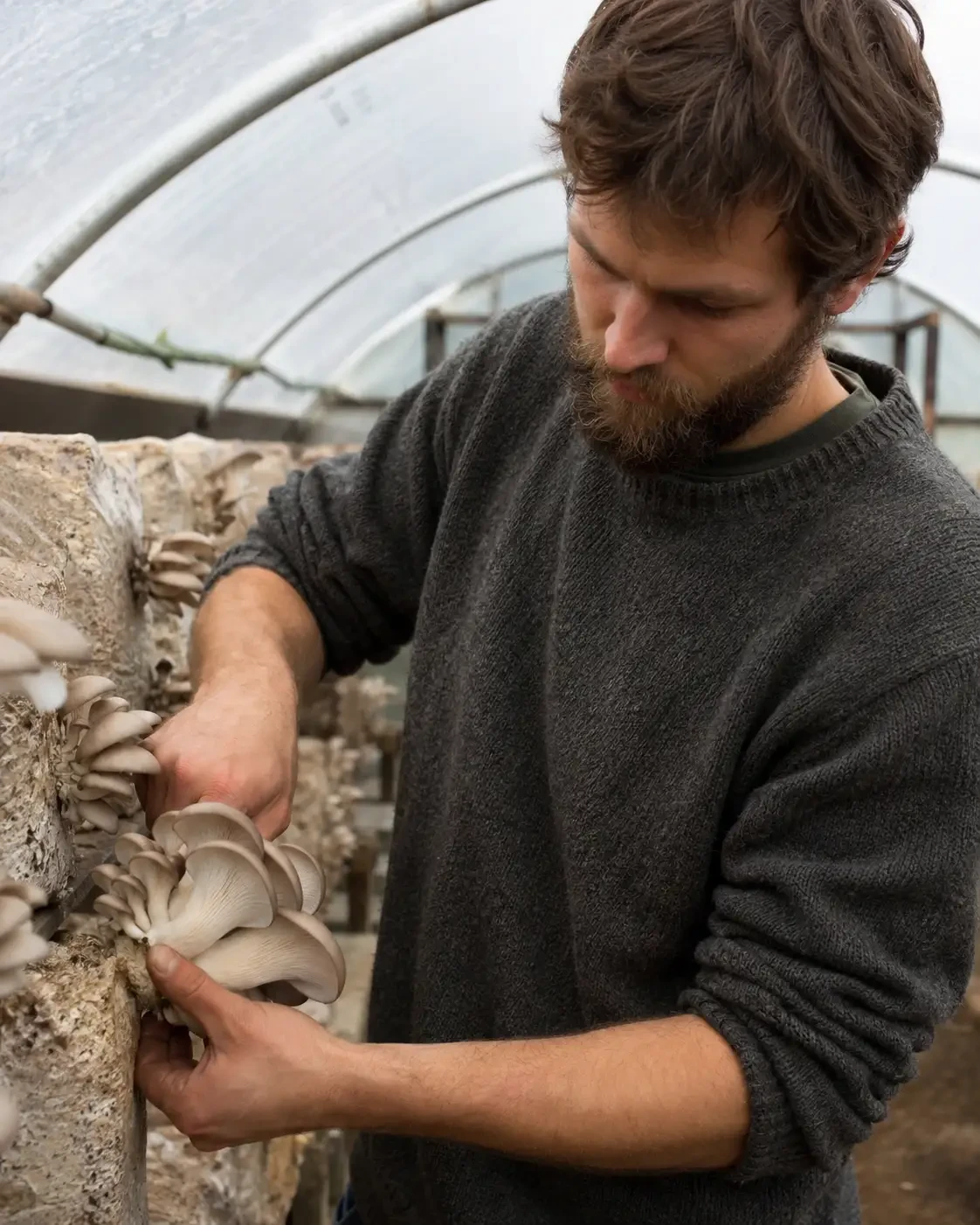
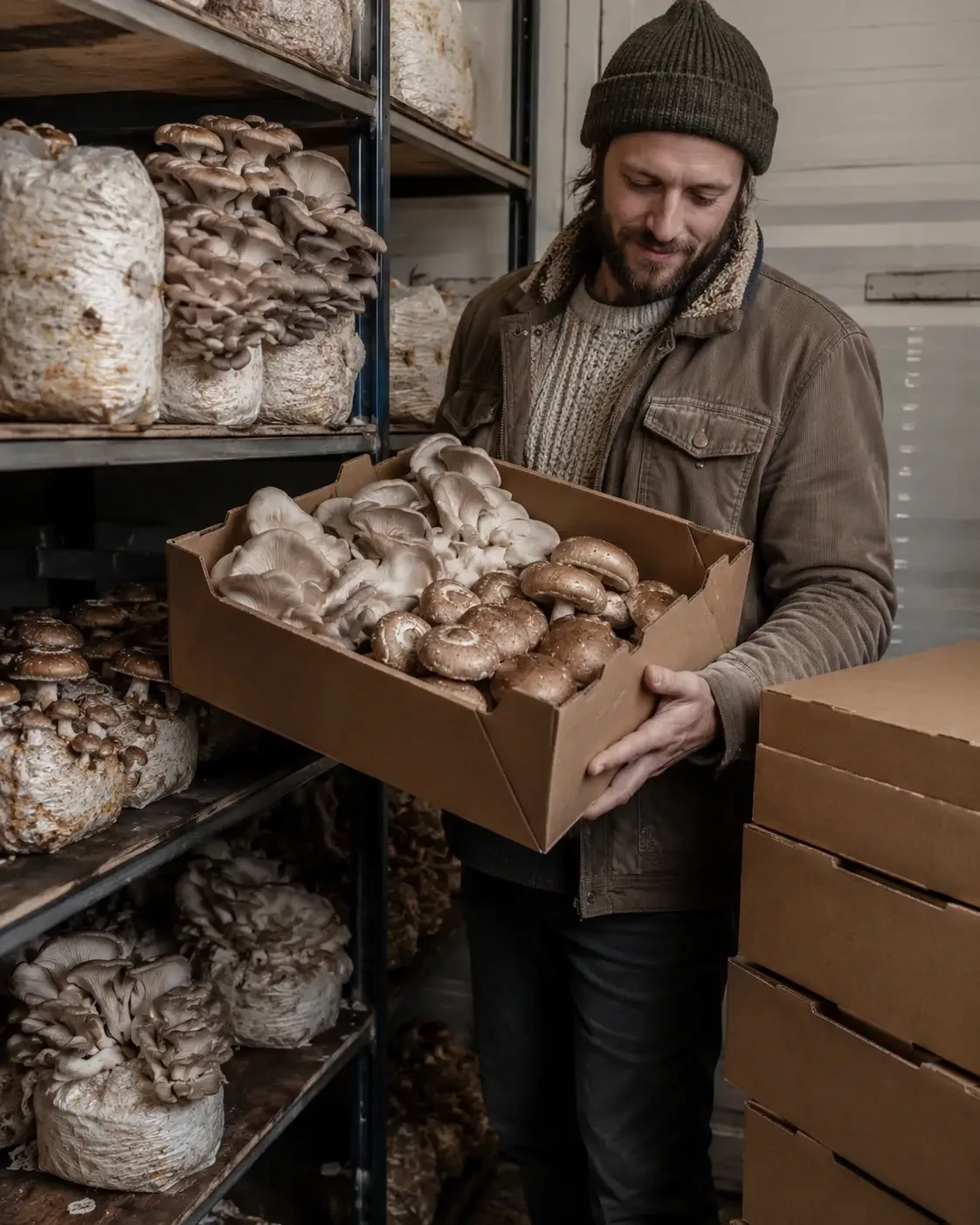
Mushroom growing is its own skilled discipline. It can happen in specialist growing rooms, indoor farms, converted agricultural spaces, urban growing units or carefully managed production sites. The grower is working with fungi rather than plants, and the production system depends on controlled conditions rather than open field seasons alone.
A stronger British mushroom supply can help support specialist growers, farm shops, veg box schemes, restaurants, independent retailers and local food diversity.
For BFFD, this matters because local food discovery should include more than familiar produce. It should also help people find the growers behind specialist, distinctive and often overlooked food.

British Mushrooms Are Not Always Local Mushrooms

British mushrooms tell you the country of production. Local mushrooms should give a closer connection to a grower, county, town, farm shop, market or supplier route. You will also find that some astonishing varieties, types and variations come from local woodlands.
A mushroom product can be British and local. It can be British and gourmet. It can be British and sold direct from a grower. It can also be British without much visible detail about the grower behind it.

That is why BFFD is trying to reward and encourage clearer supplier profiles. A customer should not have to guess whether the mushrooms came from a named grower, a nearby specialist farm, a regional supplier or a larger national supply route will be obvious to all of our profiles.

The risk comes when curiosity becomes overconfidence.

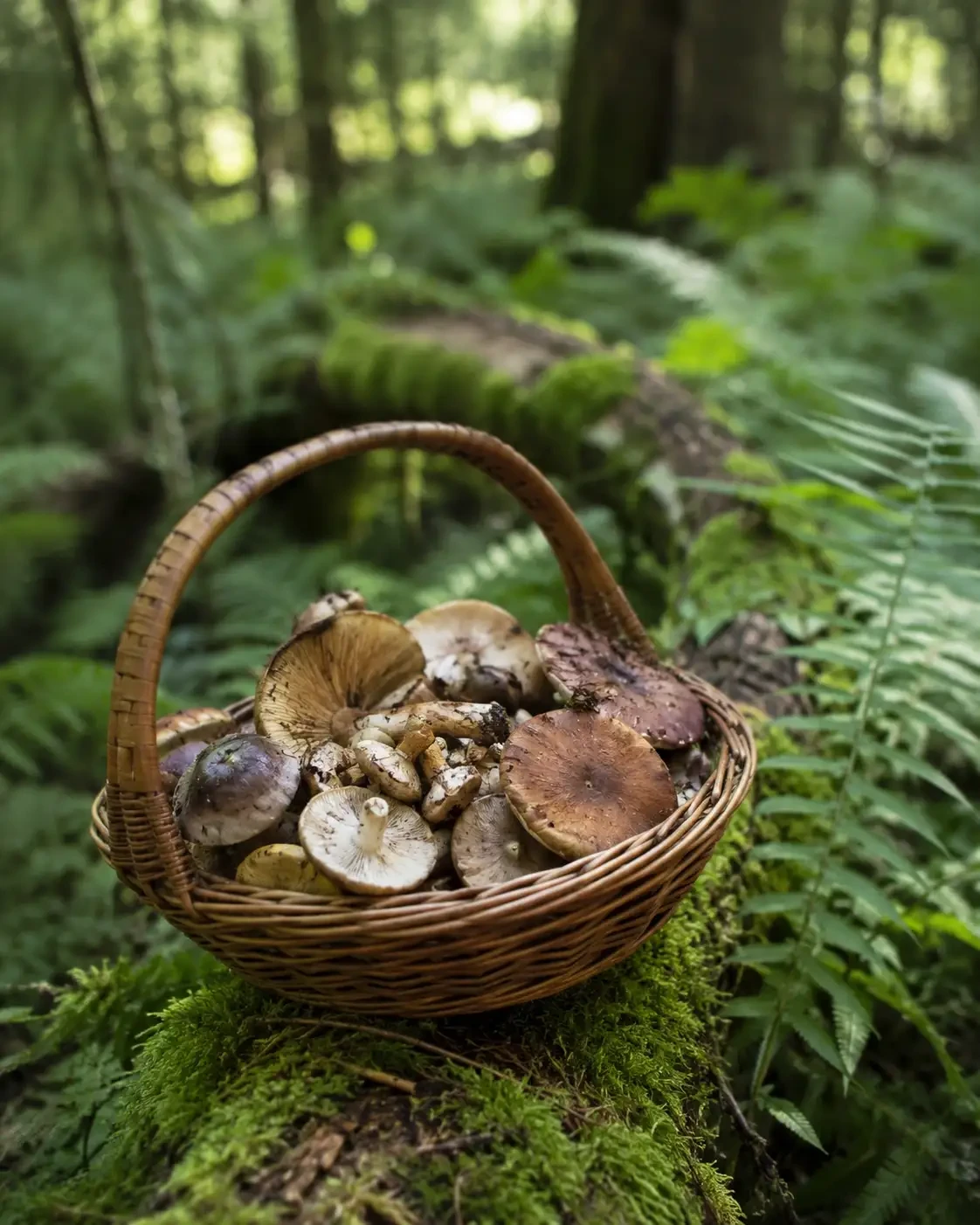
Woodland mushroom content should encourage careful observation, expert learning and respect for nature, not casual eating.
What Are The Best Mushroom Foraging Spots In Britain?

There is a shared consensus that finding reliable spots requires looking for mature woods with mycorrhizal tree partners rather than specific coordinates.
That being said there are spots that are notorious for foraging within the UK with a track record of providing fruiting bodies.
Peak mushroom foraging season in Britain occurs between September and November following warm, wet weather, with prime spots found in deciduous woods under beech and oak trees. It is essential to verify local bylaws and land ownership, as foraging is restricted in certain nature reserves and SSSI sites.
For more information, please consult official foraging guidelines and land access laws.

Popular UK Foraging Spots

British Mushrooms and Gourmet Mushrooms

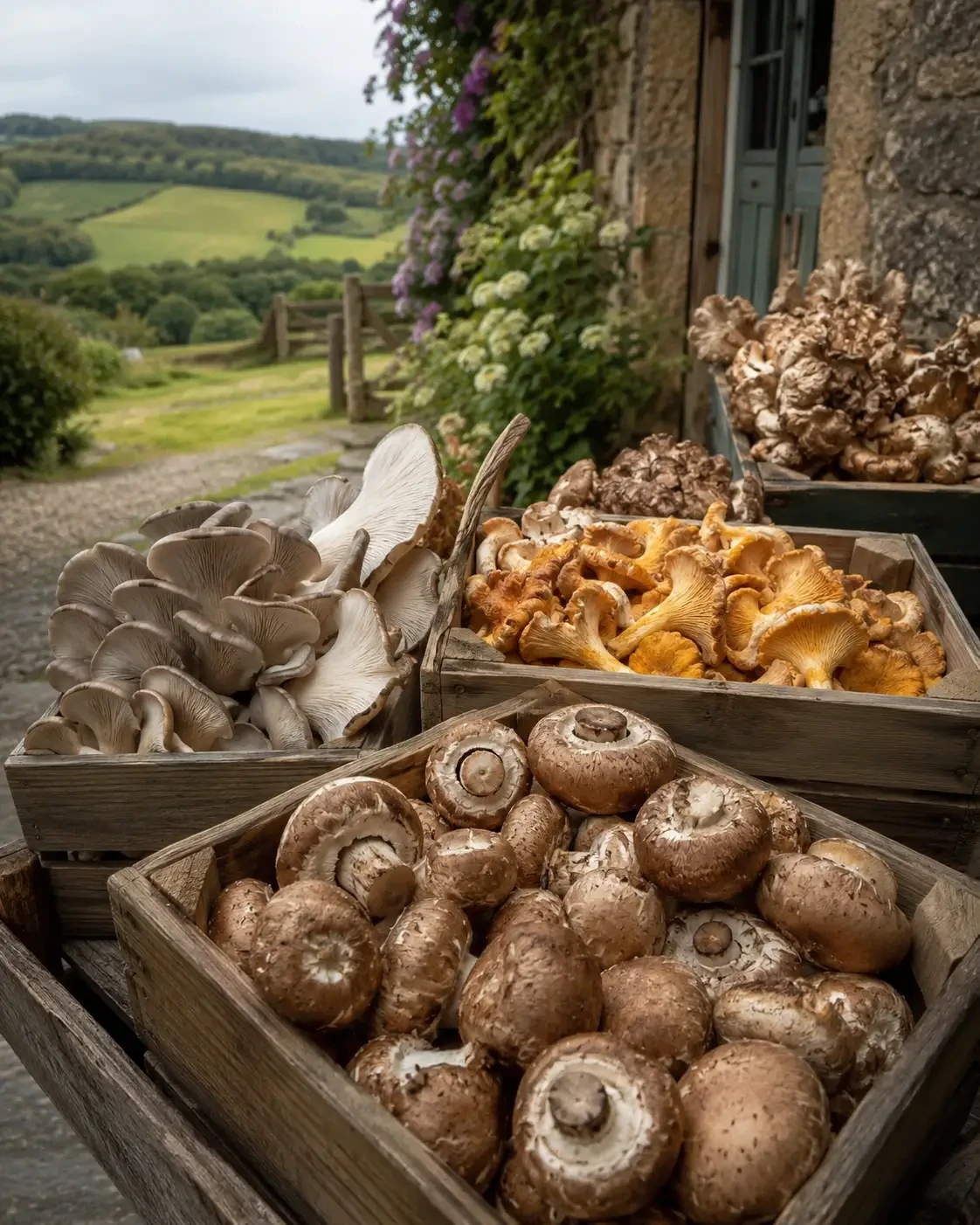
Gourmet British mushrooms may include oyster mushrooms, shiitake, lion’s mane, king oyster, maitake, enoki or mixed specialist varieties. These mushrooms can bring texture, depth and visual interest to home cooking and restaurant menus.
A good supplier should explain the variety, how it is best cooked, whether it is fresh or dried, and whether it is available regularly or only in limited batches.

For more information on Gourmet Mushrooms click the button below:

British Mushrooms and Buying Online

Of course buying British mushrooms online can be a useful route when local supply is limited.
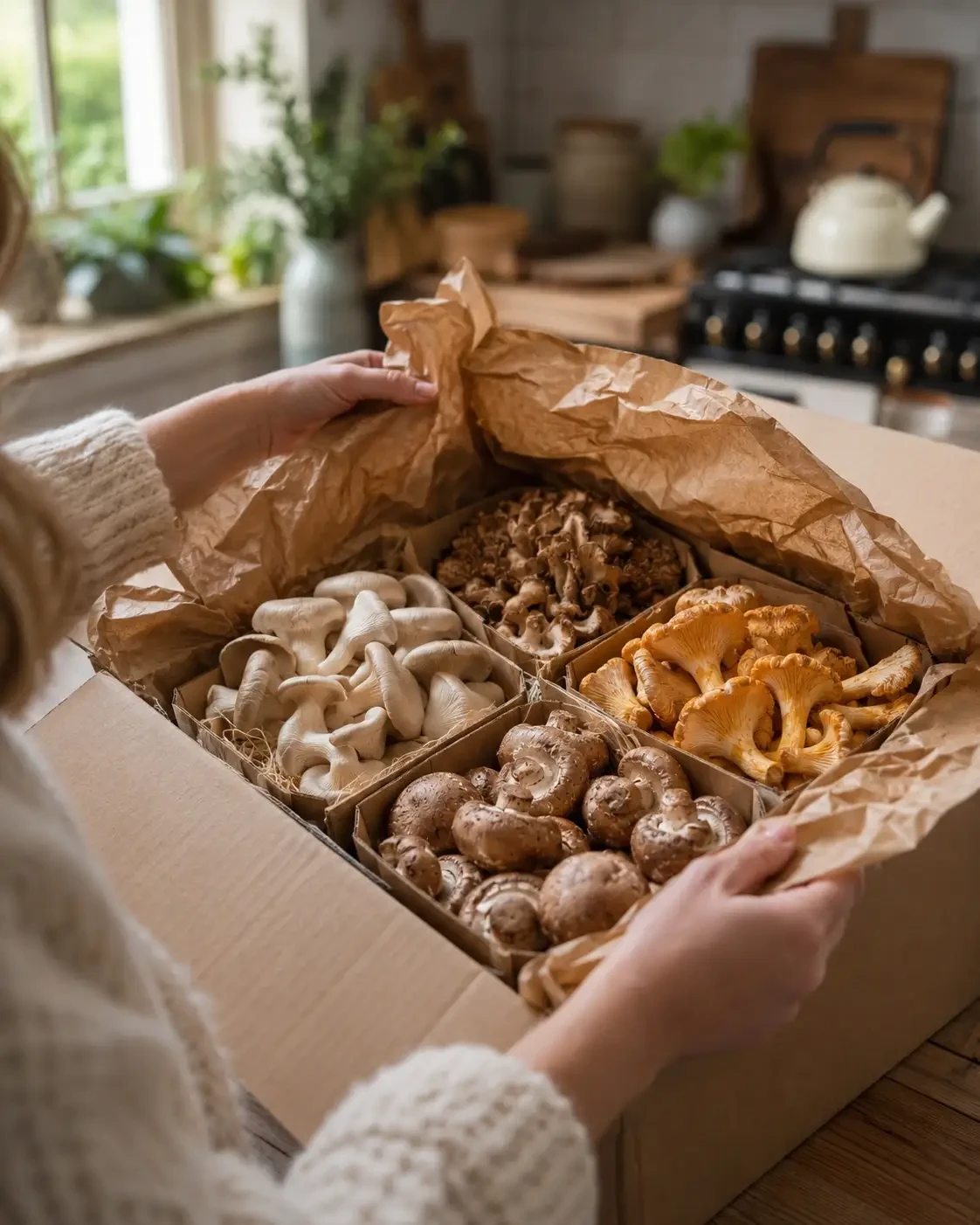
Fresh mushrooms need careful handling, packaging and storage guidance. Dried mushrooms are often easier to deliver and store, while still offering strong flavour for broths, sauces, stews and risottos. Some growers may also sell mixed boxes, mushroom powders or grow kits online.
Online buying works best when the supplier gives clear information before checkout or enquiry. Customers should know what variety is being sold, whether the mushrooms are fresh or dried, how they will be delivered, how they should be stored and how quickly they should be used.

Our incredible list of mushroom suppliers should be able to help you purchase mushrooms online or in store:
British Mushrooms Near You

If you are a mushroom lover like us then you are a shopper want British mushrooms from a grower close to home.
Local buying routes may include mushroom growers, farm shops, farmers markets, veg box suppliers, independent food shops and specialist retailers. Restaurants may also source directly from nearby growers where consistent supply is available.
Buying locally can help customers ask questions, discover new varieties and understand which mushrooms have been harvested recently.

Wild mushroom safety warning

Never eat a wild mushroom unless it has been identified with certainty by a suitably experienced expert. Online guides, photographs, apps and simple descriptions are not enough to guarantee safety. Ideally travel with a knowledgeable specialist prior to picking solo. 
British Mushrooms in Farm Shops and Markets

Farm shops and farmers markets can be excellent places to discover British mushrooms.
A farm shop may stock mushrooms from a named local grower or regional fungi farm. A farmers market may allow customers to speak directly with the grower, ask how to cook a variety and learn what has been harvested that week.
This matters because mushrooms often benefit from explanation. A shopper who normally buys standard chestnut mushrooms may be more willing to try oyster mushrooms, shiitake or lion’s mane if the grower or retailer explains how they behave in the pan.
Good product information turns unfamiliar mushrooms into confident purchases.

British Mushrooms and Restaurant Supply

British mushroom growers can be valuable suppliers for restaurants, cafés, pubs, hotels and caterers in addition to being a fantastic revenue source for experienced foragers.
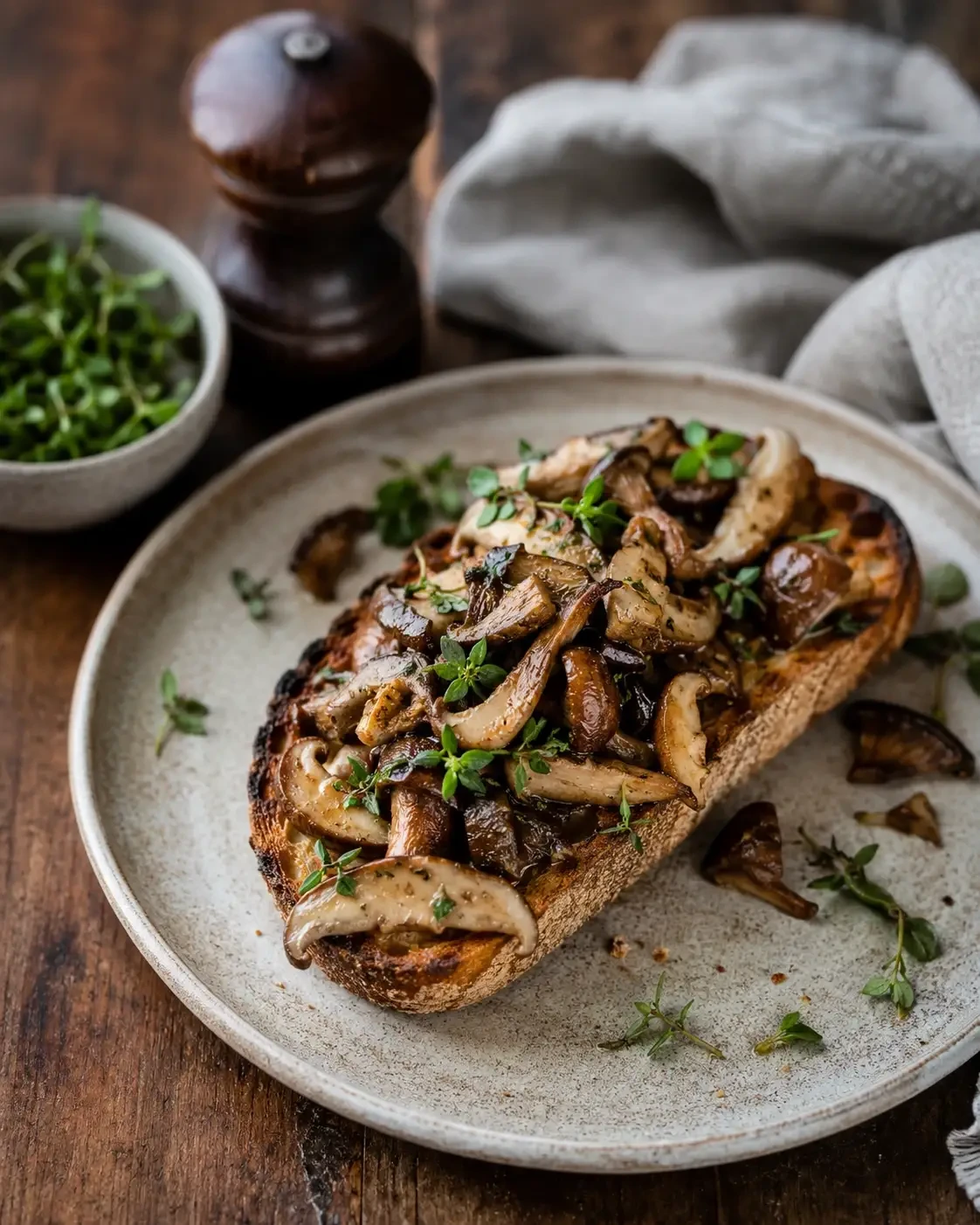
Chefs often want mushrooms for texture, flavour, visual interest and menu flexibility. Oyster mushrooms can work well in plant led dishes. Shiitake can bring depth to broths and sauces. Lion’s mane can be cooked as a substantial centrepiece. King oyster mushrooms can be sliced and seared for more structured dishes.
For hospitality buyers, the important details are freshness, consistency, ordering windows, delivery, variety and communication.
A clear BFFD profile can help restaurants understand whether a mushroom grower supplies trade buyers, what varieties are usually available and how ordering works.

The Food Resilience in Mushrooms

Mushrooms matter in food resilience because a food system needs variety. It needs field growers, livestock farmers, orchard owners, dairy farms, bakers, beekeepers, fishmongers and specialist producers such as mushroom growers.
BFFD’s role is to make those producers easier to find and understand as well as helping you grow your own should you desire to do so.
British mushrooms being supplied to restaurants
British Mushrooms and Food Resilience
British mushrooms are part of the wider food resilience conversation. They show that food production can be diverse, technical and local in different ways. A grower does not need acres of open field to contribute meaningfully to the food system. Mushroom growing can happen in controlled environments, often close to towns, cities, farm shops, markets and restaurants.

British Mushrooms and Budget Friendly Eating

Mushrooms can play a useful role in budget friendly eating, especially if you have your own mushroom production at home or if you are a seasoned forager.
They add savoury depth, texture and body to simple meals. Standard British mushrooms can stretch sauces, soups, breakfasts, pies, pasta dishes and tray bakes. Specialist mushrooms may cost more, but they can still offer good value when used for flavour and texture rather than bulk alone.
A small amount of shiitake can enrich a broth. Oyster mushrooms can make a stir fry more satisfying. Chestnut mushrooms can help turn simple ingredients into a proper meal.
Good value is not only about the cheapest pack. It is about how useful the ingredient becomes in the kitchen.

British Mushrooms and Mushroom Growing UK

British mushroom growing is different from growing vegetables, fruit or grains.
Mushrooms are fungi. They are grown from spawn on suitable substrates, with careful attention to temperature, humidity, airflow, hygiene and timing. Many people are fascinated by mushrooms but do not understand how they are produced.
The Mushroom Growing UK page should explain this in a simple, educational way. It should help users appreciate the skill behind mushroom growing without becoming a technical grower manual.

British Mushrooms and Food Safety

Mushrooms are food products and should be handled, stored and labelled correctly.
Customers should check whether mushrooms are fresh, dried, powdered, prepared or sold as part of a mixed product. Fresh mushrooms should be stored according to supplier guidance and used within the recommended time. Dried mushrooms should be stored properly and prepared according to instructions.
Prepared mushroom products, sauces, powders, mixed packs with added ingredients or ready to cook items may require ingredient and allergen information.

British Mushroom Storage and Picking
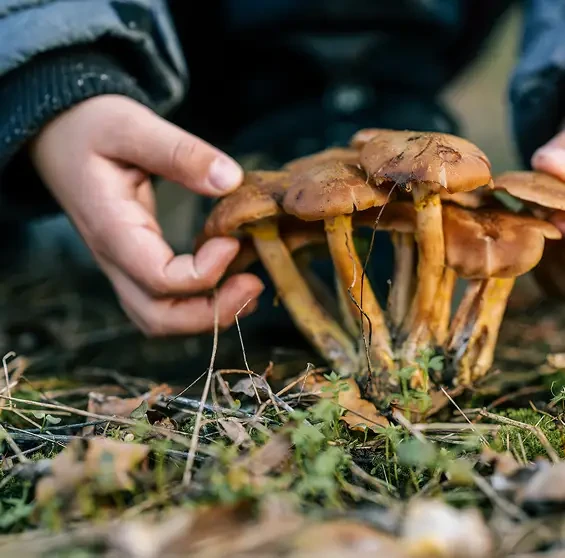
Always check whether British mushrooms are fresh, dried or prepared, how they should be stored and how quickly they should be used. Prepared mushroom products may contain additional ingredients or allergens.

How BFFD Helps People Find British Mushrooms

BFFD is being built to make local food discovery clearer and more useful.
For British mushrooms, BFFD can help users find mushroom growers, fungi farms, farm shops, farmers markets, specialist suppliers, veg box schemes, fresh mushrooms, dried mushrooms, gourmet mushrooms, online ordering routes and restaurant suppliers.
More importantly, it can help those suppliers explain their products properly.
A strong British mushroom listing should help users understand the grower or supplier, the mushroom varieties, whether products are fresh or dried, whether collection or delivery is available, and where the mushrooms can be bought.
For shoppers, this reduces guesswork. For mushroom growers, it creates another route into local visibility.

Do you grow or sell British mushrooms?

List your mushroom growing business, fungi farm, farm shop supply route or British mushroom products on BFFD and help people understand your varieties, grower story and buying options.

Common Misunderstandings About British Mushrooms

British mushrooms are not automatically local

British mushrooms tell you the country of production. Local mushrooms should provide a closer grower, county, market or supplier connection.

British mushrooms are not automatically gourmet

Gourmet mushrooms are specialist varieties or product selections. British mushrooms can be familiar everyday varieties or specialist mushrooms.

British mushrooms are not automatically organic

Organic is a separate certified production claim.

Mushrooms are not grown like field vegetables

Mushrooms are fungi and are usually grown in controlled environments rather than open fields.

BFFD does not inspect mushroom growers

BFFD helps present supplier information, but users should check food safety details, storage guidance and supplier information where needed.

Reputable External Sources

Use this for hygiene rating checks and customer trust.
Use this for official food hygiene and safe food handling context.
Use this for food business setup and safe operation context.
Use this for food packaging and labelling context.
Use this for wider food labelling guidance.

Use this for public educational context around mushroom growing.
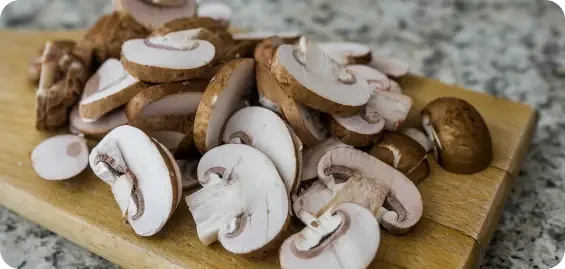
Woman handing over mushrooms

*External sources are provided for further reading. BFFD does not provide food safety, legal, trading standards, allergen, dairy hygiene, delivery, labelling or business advice. Cheesemongers, cheese makers and food businesses should always follow current official guidance and seek professional advice where required.

FAQ

What are British mushrooms?
British mushrooms are mushrooms grown in Britain. They may include familiar varieties such as button and chestnut mushrooms, or specialist varieties such as oyster, shiitake, lion’s mane and king oyster.
No. British mushrooms tell you the country of production. Local mushrooms should connect to a closer grower, county, farm shop, market or supplier route.
Yes. Some UK mushroom growers produce gourmet varieties such as oyster mushrooms, shiitake, lion’s mane, king oyster and mixed specialist mushrooms.
You can buy British mushrooms from mushroom growers, farm shops, farmers markets, specialist suppliers, veg box schemes, online mushroom sellers and BFFD supplier profiles as the directory grows. You should check out all of our maps and local mushroom suppliers.
Yes. Some growers and specialist suppliers sell fresh or dried British mushrooms online, through local delivery, click and collect or wider delivery where suitable.
No. Organic mushrooms are a separate certified product category. British mushrooms are not automatically organic.
That is the aim. BFFD can help restaurants, cafés and hospitality buyers discover mushroom growers and specialist suppliers by location and buying route.
Yes. Mushroom growers, fungi farms, farm shop suppliers and specialist mushroom businesses can create BFFD profiles to improve local discovery.

Find British Mushrooms With Clearer Grower Information

British mushrooms should be easier to trace back to real growers, farm shops and specialist suppliers. BFFD is being built to help people discover mushroom growers and fungi businesses with clearer links between food, growing, place and trust.