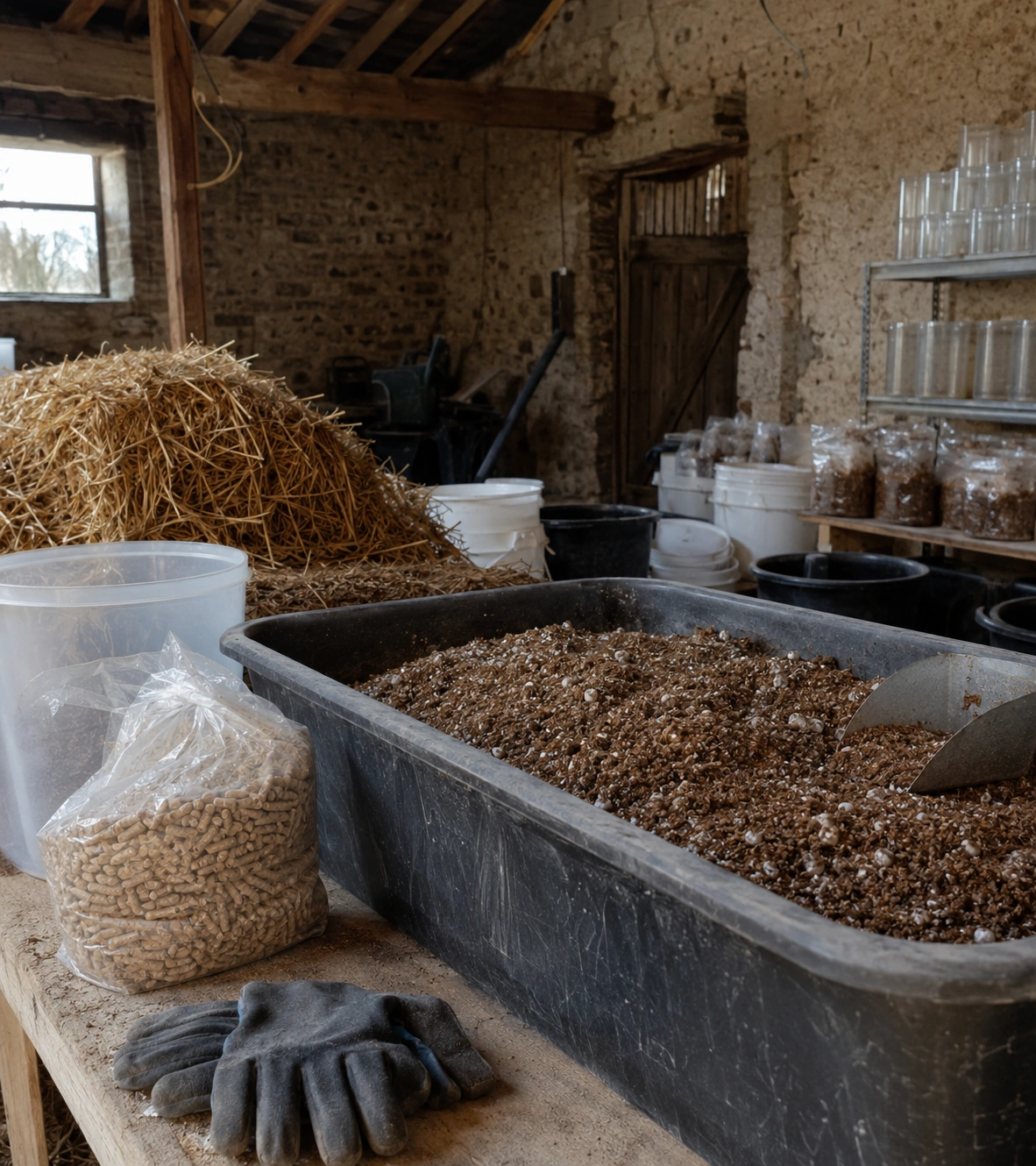
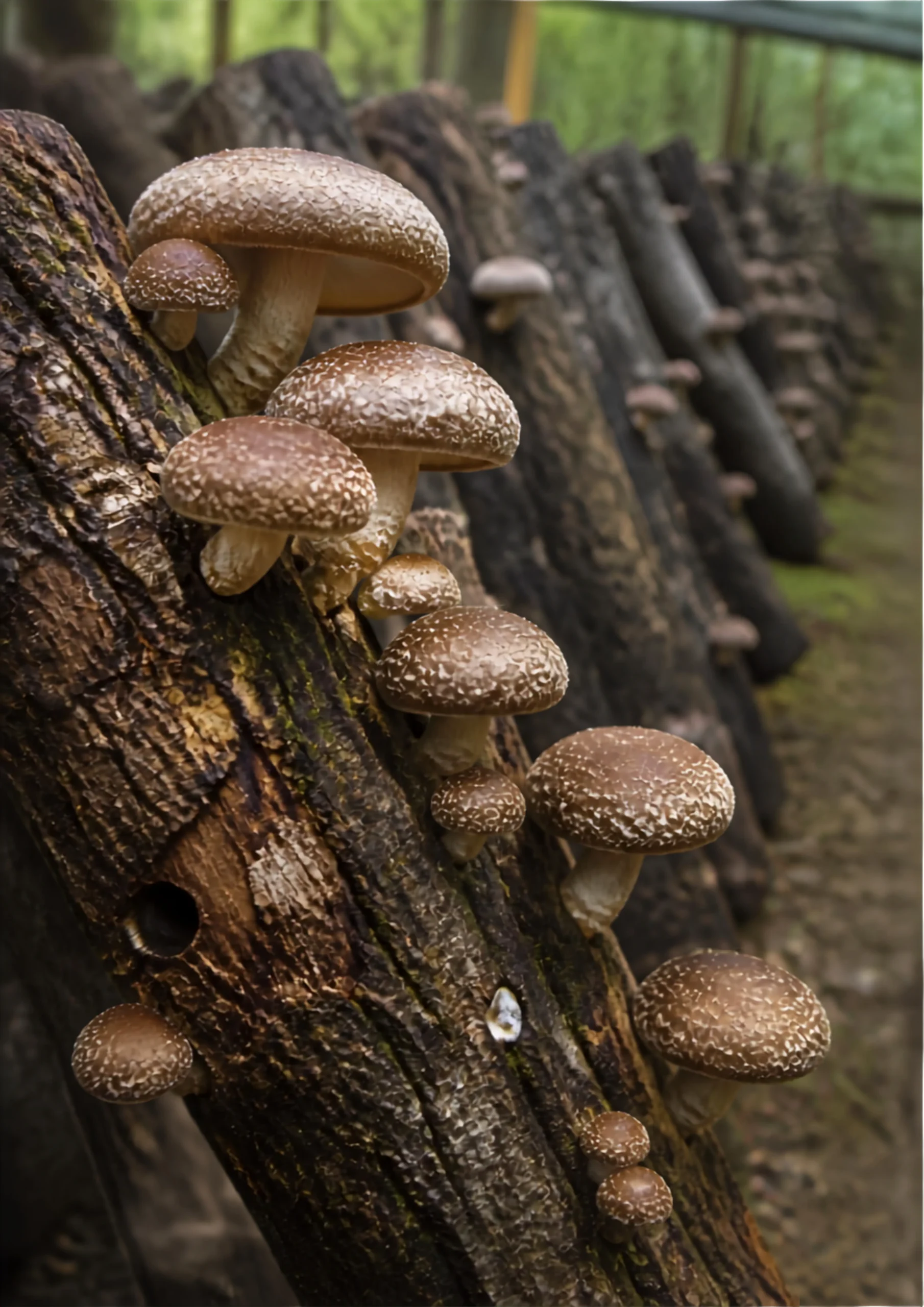
Typical mushroom growing methods involve introducing mushroom spawn to a suitable substrate, allowing the fungal network to develop under controlled conditions, then encouraging mushrooms to fruit when the environment is right. Commercial and specialist mushroom growers may use indoor growing rooms, tunnels, controlled containers, bags, blocks, shelves, trays or logs depending on the mushroom type. Key factors include hygiene, substrate quality, humidity, airflow, temperature, harvest timing, storage and safe handling. Mushroom growing for sale should be treated as specialist food production, not casual gardening.
The grower adjusts or manages the environment so mushrooms can form properly. This normally means bringing in cool air to shock the mycelium and fresh oxygen to reduce the C02. These components ‘shock’ the network into producing fruting bodies.
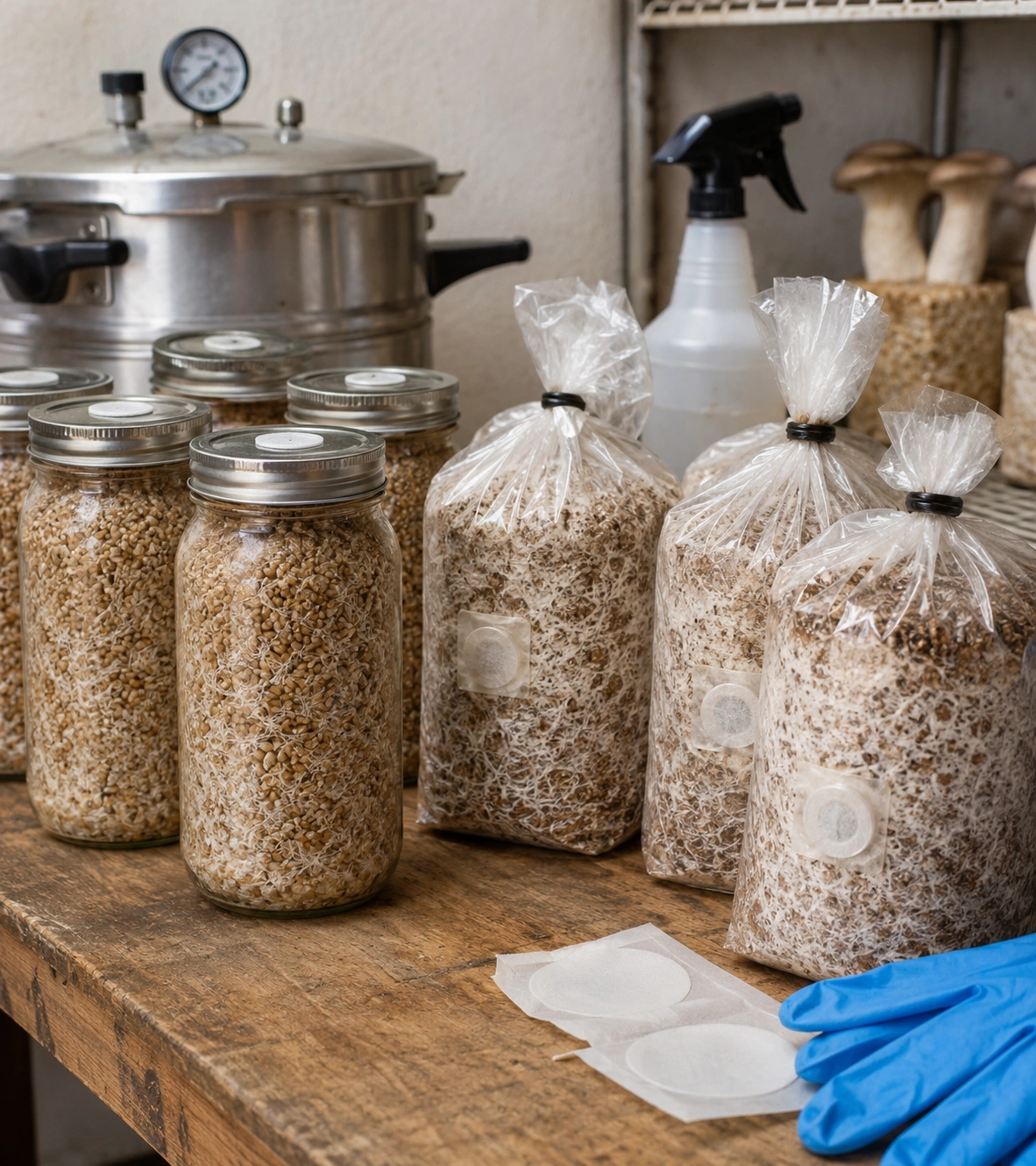
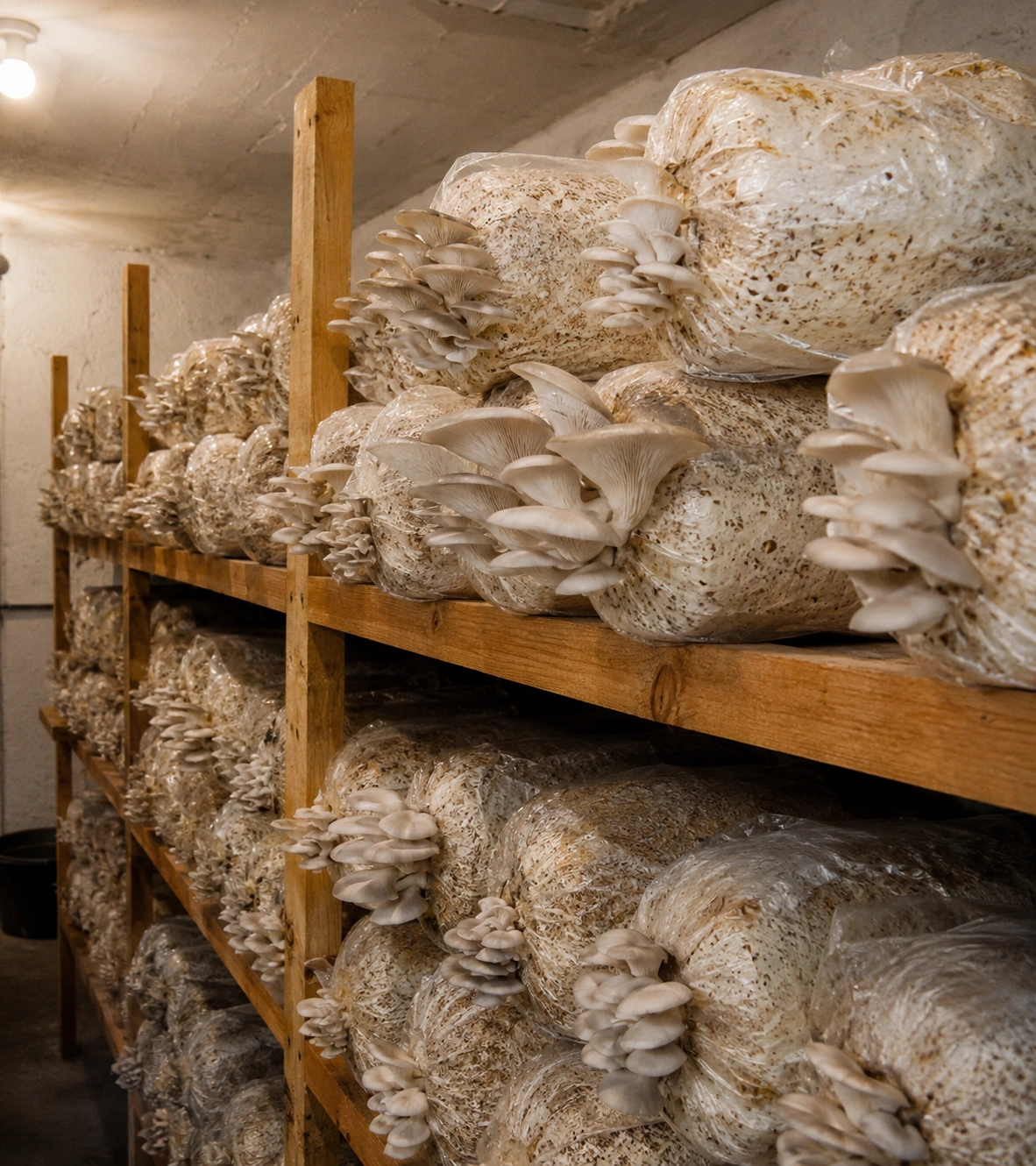
Hygiene is central to mushroom growing. Mushroom production involves living fungal growth, which means the growing environment must be managed carefully. Contamination can affect crop quality, yield and safety. Growers need suitable cleaning routines, handling practices, equipment management and food safety awareness.
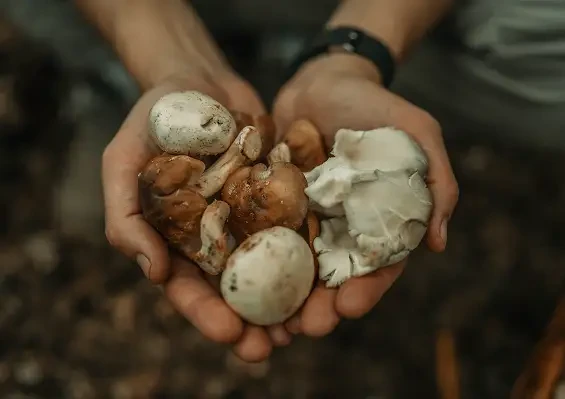
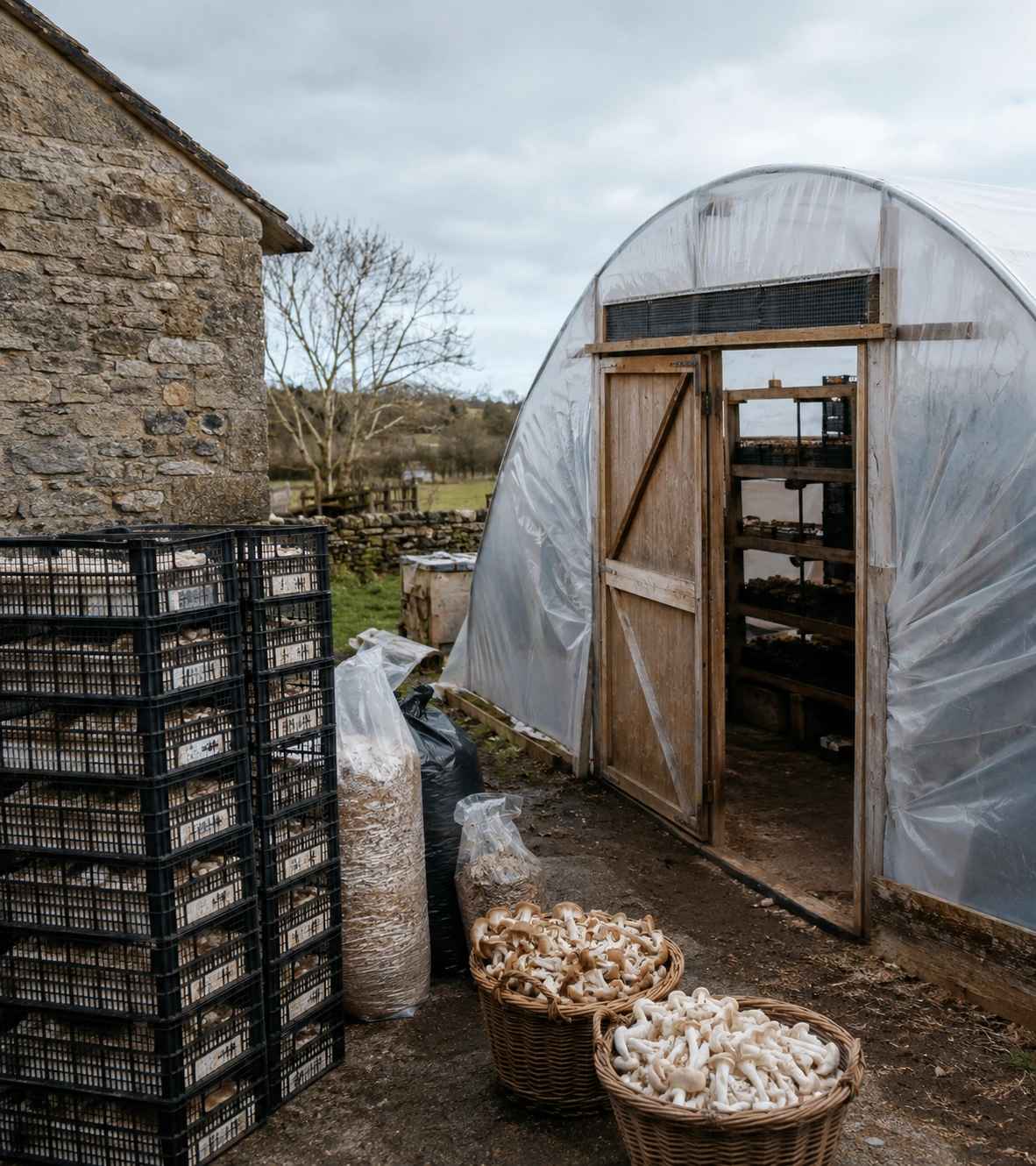
Mushrooms are often harvested by hand at the right stage of growth. Harvest timing matters because mushrooms can change quickly. Size, texture, cap shape, firmness and freshness can all affect quality. Some mushrooms are best harvested young. Others are allowed to develop further depending on the product.
Woodland mushroom interest can help people appreciate specialist mushroom producers.
Once users understand how complex and risky wild mushroom identification can be, cultivated mushrooms become easier to value. A mushroom farm offers a safer, clearer and more consistent route to edible mushrooms.
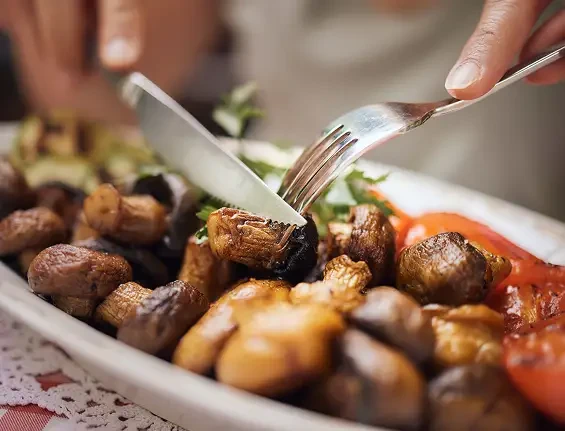
Specialist growers may supply oyster mushrooms, shiitake mushrooms, lion’s mane mushrooms, king oyster mushrooms, mixed mushroom boxes, dried mushrooms and restaurant produce.
Many users search for woodland mushrooms because they want to know whether a mushroom is edible.
This is understandable, but the answer must be careful.
An online page cannot safely confirm edibility from a user’s memory, photograph or short description. A responsible edible mushroom identifier page should explain the limits of identification and why expert confirmation is essential.
Use this for general woodland fungi education and nature awareness.
Use this for woodland fungi education and habitat context.
Related Mushroom Pages
Want to get food independence, support your local grower, get better prices and shop more privately?
Local food isn’t just something you find. It’s something you protect. A free account helps keep local supply visible, supported, and resilient.
….it takes 30 seconds for food lovers and 5 minutes for suppliers
We built this for people who care where their food comes from. For people who want to remain food secure. For Farmers to get to the local people, who deserve a better income and to deliver a better price for you. For the environmentally conscious and the privacy-conscious. An account simply helps us make the map and supplier reach more useful to you, without changing how open it is. You’re always in control.


Find local food. Stay connected to it. Create a free account to support local producers and be part of a growing food network.